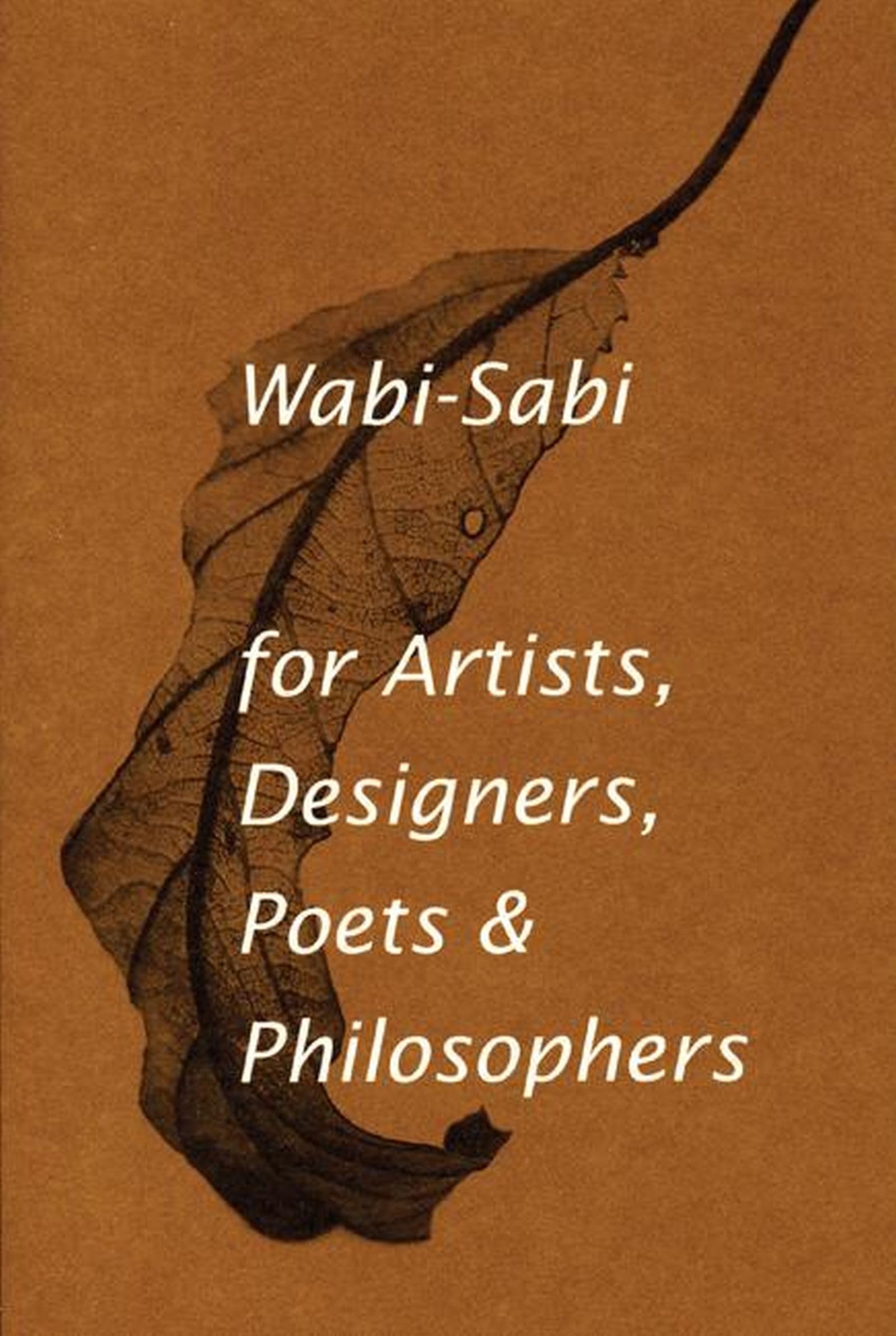
Wabi-Sabi for Artists, Designers, Poets & Philosophers
Product ID: 1428763
Buy anything from 5,000+ international stores. One checkout price. No surprise fees. Join 2M+ shoppers on Desertcart.
Desertcart purchases this item on your behalf and handles shipping, customs, and support to Congo.
An updated version of the seminal 1994 classic volume on the beauty of things imperfect, impermanent, and incomplete. Every book with "wabi" or "wabi sabi" in the title is based on the concepts first elucidated in this book. Review: great - Great Read Review: A Brief but Fascinating Introduction to Wabi-Sabi - I was surprised at the brevity of this book, though not disappointed by it, as it made for a very concise read. I got through it in just an hour or two. Leonard Koren approaches this material as someone with a background in design/architecture. I bought it based on a primarily philosophical interest in the subject. The book focuses, I think, a bit more on design/art theory than pure philosophy, but it still makes for a very informative read, and the philosophical basis of Wabi-Sabi is nonetheless given due consideration and explanation. The book itself is designed pleasantly, with a great tactile feel on the cover and glossy pages with a pleasant gray font. The text is interspersed with Koren's beautiful photography, highlighting objects that embody the Wabi-Sabi aesthetic. If you're interested in learning about the history and nature of Wabi-Sabi, especially if you are a student of design, then I would highly recommend this book as a starting point.
| Best Sellers Rank | #21,509 in Books ( See Top 100 in Books ) #4 in Philosophy Aesthetics #10 in Arts & Photography Criticism #16 in Japanese History (Books) |
| Customer Reviews | 4.6 out of 5 stars 875 Reviews |
A**8
great
Great Read
L**E
A Brief but Fascinating Introduction to Wabi-Sabi
I was surprised at the brevity of this book, though not disappointed by it, as it made for a very concise read. I got through it in just an hour or two. Leonard Koren approaches this material as someone with a background in design/architecture. I bought it based on a primarily philosophical interest in the subject. The book focuses, I think, a bit more on design/art theory than pure philosophy, but it still makes for a very informative read, and the philosophical basis of Wabi-Sabi is nonetheless given due consideration and explanation. The book itself is designed pleasantly, with a great tactile feel on the cover and glossy pages with a pleasant gray font. The text is interspersed with Koren's beautiful photography, highlighting objects that embody the Wabi-Sabi aesthetic. If you're interested in learning about the history and nature of Wabi-Sabi, especially if you are a student of design, then I would highly recommend this book as a starting point.
T**Y
Here's why it's for "artists and designers"
As a graphic designer, I was very intrigued by the title of this book, and the philosophies contained inside, so I decided to give the book a shot. This is the type of book you blaze through in about 30 minutes, but will most likely want to keep for a lifetime as inspiration. Reason? Because there simply isn't another book of it's tone or mission. The essence of Wabi-Sabi is that true beauty, whether it comes from an object, architecture or visual art, doesn't reveal itself until the winds of time have had their say. A cracked pot, for example, has an essence that a perfectly round pot is lacking. Beauty is in the cracks, the worn spots, and the imperfect lines. As a graphic designer, Wabi-Sabi is the antithesis of what I pursue every day -- perfection in my typography, layout, tight invisible Swiss inspired gridlines, etc. Mathematical symmetry is an unshakeable mission for many in my profession, and the ancient philosophies of Wabi-Sabi rip a hole in the side of it. I enjoy owning the book as a reminder that nothing in life, or design, is perfect. The very essence of life, work, art and nature is free of right angles, and chaos reigns supreme.
T**Y
Wabi sabi tells us to stop our preoccupation with success and enjoy the unencumbered life.
I love short books that are meaningful. This book I read in a couple hours and the message is so peaceful and life giving. Wabi Sabi is a term that comes from two Japanese words mashed together and it is rarely defined, indeed it kind of avoids being defined. The author says Japanese people know the feeling but not the definition. This was indeed my experience in Tokyo as I asked my friend to guide me to things that connected with Wabi Sabi culture. There are black and white photos on almost every other page of this book, of various things that convey the Wabi Sabi idea. The book spends a few pages on conveying the definition or more accurately, the feeling of Wabi Sabi, it gives a bit of history, then outlines the "Wabi Sabi Universe" which includes the following headings: Metaphysical Basis Spiritual Values State of mind Moral Precepts Material Qualities Wabi Sabi is the opposite of the Rat Race. It reminds me of Jesus' Sermon on the Mount or the struggle against nature. It values simplicity and perhaps above all the process of nature. Thoreau and Emerson would approve. Some quotes: "Get rid of all that is unnecessary" "Wabi sabi tells us to stop our preoccupation with success--wealth, status, power, and luxury--and enjoy the unencumbered life." "Things wabi sabi have no need for the reassurance of status or the validation of market culture."
H**N
so simple and effective
I had to wait for this because of the tim ferriss effect, LOL, but the book was worthwhile reading. At a leisurely pace it was about 2 hours on a lazy Sunday to reabsorb and grasp simple concepts. This is definitely a rare treat that will help meditatively reset your thinking yearly. The book is also printed with special fine paper that is cut unevenly which is interesting. Reminds me of the nice pages that you'd commonly find in Japanese books. Definitely a find addition to anyone's library.
S**K
Deep and Interesting
After a first quick read through, I realized this is a book I will go back and read again and again. I purchased it to read in relation to the artwork I produce; to see if there was the spirit of Wabi-Sabi in my work. While it is an easy read, the philosophy is a bit harder to grasp, as I feel there is such a cultural difference between East and West that there is only so much a Westerner can truly understand. On the other hand, it is a text that is exceptional in explaining as well as possible a phrase that, even among the native population that gave birth to it, finds difficult to put into words. It is a concept, a part of the spirit, a unique state of being. I highly recommend this book for the provoking thought it will produce both at a work level and at a spiritual level.
F**O
Wabi-Sabi: Not just a Japanese condiment that is great on sashimi
I happened upon this book because of those Amazon suggestions that were displayed when I was ordering another book...a copy of The Book of Tea for a friend. Perhaps I should stop harping about the Big Brother aspect of such practices. LOL. I had a sort of epiphany in realizing there was a name for the aesthetic that I love and strive to create. And I suppose it influenced me, since I seem to have embarked on a new path, or perhaps just returned to one and continued on the journey. I was intrigued by comments made in one of the popular reviews here concerning a disappointment that the book did not address techniques for creating Wabi-Sabi. It made me think of the notion that you can teach knowledge, and skills, but you can't teach talent. And my first impression is that Wabi-Sabi has much more to do with the latter. And perhaps it has a much stronger link with the subconscious. I mean, isn't a fundamental aspect of the aesthetic that it looks like there was no human involvement in the creation? In any case, this is one of the few books that will be on my shelf permanently.
R**U
A thin slice of Zen
A super short book you could finish in a day or while traveling. There are a lot of pictures, the text is large, and that pages are thicker than your normal book. I read it again after first reading it in 2019. Something about it this time fell a bit short from what I remember. The first 50 pages are dedicated to history, mainly in the origins of wabi-sabi and tea culture. From there it gets into more poetic, tangible descriptions of wabi-sabi in everyday life. Untouched nature, mended belongings, lived-in spaces. These are ordinary things that show their history as they edge close to nothingness. There is a memento mori quality in wabi-sabi. I think my main takeaway is that it's a term for organic: let the human element appear in the work, eliminate the hierarchy, treat nothing as too sacred.
E**C
Delivery
Excellent read.
M**A
A wonderful reading experience
There was nothing I didn't like about this book, it captivated me from the first page to the last. Easy to read and also very informative, it presents clear notions of what Wabi-Sabi is and what it is not. It goes down to the roots of the concept and follows its evolution through time and space. The comparisons with our Western art principles are also very clear and helpful. I'd recommend this book to almost anyone who likes reading and very specially to some Western authors who publish their own books on Wabi-Sabi techniques using colours and textures in great excess, that are exactly the contrary to the Wabi-Sabi approach.
H**U
nice try
Das Büchlein versucht eine grundlegende ganzheitliche Darstellung des Themas. Dies ist nicht ganz einfach, weil wabi sabi dem rationalen Denken nicht ganz zugänglich ist, es ist aber in diesem Fall überaus gut gelungen. Es vermittelt kurz gefasst das Konzept und die Geschichte auf der intellektuellen Ebene, angereichert um schwarzweiße Photographien die auf der intuitiven Ebene funktionieren. Sehr gelungen und absolut empfehlenswert.
P**E
Joia rara.
Um dos melhores livros que li na vida, uma poesia em forma de ensaio sobre a estética, a arte e o olhar oriental sobre os objetos, a natureza, o espaço geográfico... em muitos momentos temos a sensação de estar lendo um texto de cunho espiritual, porque de fato essa leitura tem a proeza de levantar o espírito, tamanha a sua leveza e sensibilidade. Recomendadíssimo.
G**I
Saggezza. Tanta .
Piaciuto tutto.
Trustpilot
2 months ago
3 days ago