Buy anything from 5,000+ international stores. One checkout price. No surprise fees. Join 2M+ shoppers on Desertcart.
Desertcart purchases this item on your behalf and handles shipping, customs, and support to Congo.
🔧 Elevate Your Testing Game!
The Pro1-100KHz LCR Meter is a high-precision tool designed for professionals, offering 0.1% accuracy and a wide measurement range. With five selectable test frequencies and additional features like diode testing, this meter is perfect for any electronic project. Backed by a one-year warranty and lifetime support, it ensures reliability and longevity in your testing endeavors.


| Asin | B07K2QYMG5 |
| Best Sellers Rank | #191,511 in Industrial & Scientific (See Top 100 in Industrial & Scientific) #20 in LCR Meters |
| Brand Name | LCR Research |
| Customer Reviews | 4.6 4.6 out of 5 stars (75) 4.6 out of 5 stars |
| Item Dimensions | 5.94 x 0.75 x 0.59 inches |
| Item Weight | 30 Grams |
| Manufacturer | LCR Research LTD. |
| Measurement Type | LCR Meter |
| Model | LCR Pro1 |
| Part Number | PR1-001UT |
| Power Source | Battery Powered, Usb Charging |
| Style Name | Pro1 with Spare Test Tips |
| Upc | 731882321685 |
User
I am extremely happy with these and would HIGHLY recommend them to anyone ...
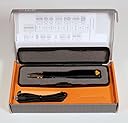
I was a little hesitant about buying these as I had already order the ST5S model from "Smart Tweezers" brand and I wasn't sure if it would be worth it for the additional $29 price increase over ST5S. I however am extremely happy with them and would HIGHLY recommend these to anyone who has a use for them. That is the short version.Here is the long one.Since I ordered both the "LCR Research" Pro1 Plus and the "Smart Tweezers" ST5S roughly around the same I thought it would be good to compare the two in case someone else out there is going through the same decision. They are about the same price, look almost the same, and are both considered and LCR meter. However they are not the same.First I will start with the aesthetics and functionality of them. First thing you notice when you open up the two side by side (see pictures) you see initially the ST5S looks like it has more stuff. It comes with a USB stick, charging cable, AC to DC adapter (which is a blackberry brand?? Guess they had a few leftovers from those things still) Calibration Certificate, small hard plastic case and finally the tweezers themselves.The Pro1 Plus took a more simple but effective approach, It comes with a charging cable, hard plastic padded case and the tweezers. Doesn't look like a lot but in reality who doesn't have a USB port to plug it in if it needs charging or who needs another cheap/giveaway type USB flash drive? As for the old blackberry charger that came with the ST5S, I just though it was funny but I don't think you want your customers laughing at your product. The one plus it did have was the packaging was nicer but in the long run that really doesn't matter.The cases that come with each one are two very different designs. The ST5S has a thick hard black plastic "tube" that you slide your tweezers in to. The problem I have with that is how do you know if the tips of your tweezers are not hitting the bottom of the "tube" Say for example you accidelnty drop it and the impact forces the pins down to the bottom of the "tube" and smash the points. But you will never know unless you have X-Ray Vision because the thing is black plastic.The Pro1 Plus has a hard black plastic case with a foam cut out that forms around the tweezers and more importantly the tips. Keeping them protected in case it falls to the floor by accident. I would defiantly pick the Pro1 Plus's case over the ST5S if I saw them both in the store.Now the Tweezers them selves. First think you notice when you turn on both screens is the size difference. The Pro1 Plus is bigger and on such a small device it makes a huge difference. Not only is the actual screen it self bigger but the font the Pro1 Plus uses is bigger. Next is how each one of them implements their navigation system to get to the menus. If you notice on the ST5S you have a single "joystick" to use to navigate. you can go up down left right or push the button in. This seems like it would be a good system but the "joystick" is so small that for me with fat fingers some times will hit the wrong direction or push it in instead of pushing it to the left, etc. The second problem I had with it was there seemed to be a bit of a delay between pressing the button and the screen responding. Or I would think I pressed it and hear a "click" but nothing would happen at all. So I never knew if I should wait because of the delay or press it again because it didn't register or I pressed it the wrong way. Also the screen is so small and the font is even smaller. I don't have that bad of eyes and I was having to be like 6 in away from it to read the screen menu/settings not measurements. So anytime I wanted to change something and make sure I got it to the right setting I had to bring it right up to my face.The Pro1 Plus has a much clearer and bigger display that seemed to have more contrast between the black of the screen and the font. I can actually have the tweezers down by what I am measuring and change settings with no problems. The navigation system for the Pro1 Plus is much easier to use and a lot more responsive. You can go up down or hit enter and that makes switching what options you want to turn on or off so much less complicated and more intuitive. Also when you hold down the button for half a second to get to the main menus screen. It takes half a second and no more, and works first time every time.On to using the meter for measurements.The Pro1 Plus really has the ST5S beat hands down in this regard from more features to better accuracy and from my experience better in circuit testing. I will mention some notable features but if you want to know all the features you can go to their website and check them out. What I found useful was the very low test voltage for in circuit testing. The Pro1 Plus goes down to ..2V and the ST5S's lowest voltage is .45V. The other think I liked was the Pro1 Plus went to 100KHz bandwidth for the test frequency where as the ST5S only goes up to 10KHz. Also I though it was nice of LCR Research to put in a self calibration test so it stays accurate for the conditions your in. Another notable feature of the Pro1 Plus is they have very small precise tips on them. I know that Smart Tweezers makes a set of "precision tips" but they cost an extra $60 and the ST5S comes with standard tips. I didn't see that much of a difference between the two when it came to just measuring components out of circuit as pictured and checked with my fluke 87v. Where I did notice a big difference was in circuit. If you look at my pics (sorry I tried to get them in order but it wouldn't let me or I don't know how) you can see that I am measuring the same resistor with each pair and the ST5S keeps reading resistors as caps. Granted there are caps inline with those resistors but its still not the component I am measuring. I should note that when I was testing them I had both of them in Auto mode. This happened multiple times. There were times with the ST5S that it identified the right componet but the ratio was really bad. Another feature that the Pro1 Plus has that the ST5S does not is a LED checker. I tested it out as you can see in my pics and it lights up an LED and shows its Vf and If. The ST5S when put in diode mode just tested as "Short" Again if you want to know more about the many functions that the Pro1 Plus has please see the website as I do not feel like just relisting them here.Another experience that motivated my buying decision was I had emailed the sales team at LCR Research and asked them a few things about the Pro1 Plus. A gentleman named Chris got back to me very quickly and answered all my questions and then some. He also assured me that if I had any issues with the Pro1 Plus I could contact him with questions and he would respond in the same timely manner.If I can expect that same type of support regularly then I will a very happy customer.I did also buy the PC Link that sells separately that comes with free software and it sounds really cool and can't wait to try it. Unfortunately their program does not work on Windows XP. It will only work on windows 7 and higher. I think its time my work paid for a new computer wouldn't you say? Anyways overall I think that the Pro1 Plus is better in every way down to the case design. This company is new so I don't think they have a lot of reputation but if they keep the way they are going they will soon be domination the market for these instruments. Its kind of sad to say I can't find a single thing that I like more on the ST5S than the Pro1 Plus but that's the way it is. I sent back my ST5S this morning for a refund. I will try and update this when I get a chance to use the software capabilities of the PC Link and tell you how I like it. Hope this helps someone make a decision they were going back and forth over for a while.
User
LCR Research's LCR-Pro1 Handheld LCR Meter is an excellent, tweezers type device for testing and troubleshooting SMD ...
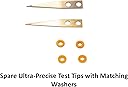
LCR Research's LCR-Pro1 Handheld LCR Meter is an excellent, tweezers type device for testing and troubleshooting SMD circuits. It is accurate and super easy to use. By automatically identifying resistors, capacitors, and inductors, it chooses the best properties to display without manual range adjustments.The OLED display is 0.96" which is the largest size and resolution I can find in this form factor. The menu and measurement results are very easy to read. The display can be switched to left or right hand operation and its brightness can be adjusted in menu.The gold-plated tips are replaceable. They are shaped to hold loose SMD components, or test the components already soldered to a PCB. If you’ve ever tried to measure SMD components with a typical multimeter - balancing the probes on the SMD components pins to ensure reliable contact - the value of the LCR-Pro1 tweezer type probes is apparent - with LCR-Pro1 meter I had no problem identifying a few parts mixed together on my workbench.The LCR-Pro1 graphic menu is navigated with a 3-way joystick. The joystick control is very convenient and easy to use. The joystick shortcuts - single or double click – are a fast and intuitive way to change parameters without using a menu.The LCR-Pro1 measures both the real and imaginary impedances and to display the theta angle for resistance measurements, series or parallel equivalent resistance or D for capacitance and series or parallel equivalent resistance or Q for inductance measurements. It has many additional functions like continuity, component sorting, diode polarity and direct current measurement.The LCR-Pro1 saved me a lot of time debugging my latest surface mount electronic design projects. I have lots of tiny 01005 and 0201 SMD components placed close to each other on PCB. Probing with the LCR-Pro1 precise tweezers probes is faster and easier compared LCR meters I’ve used before. One handed operation allows the use of another hand to hold and properly position PCB during in-circuit testing. Test voltage can be selected between 0.20 V, 0.50 V and 1.0 V. for accurate in-circuit measurements without turning on semiconductor junctions I use 0.2V setting. The 1.0V is a best choice to measure some types of ceramic capacitors, such as X5R, whose capacitance varies with applied voltage.Another function I really liked is self-calibration. It can be done simply by shortening and opening tips. After self-calibration, I saw parasitic parameters were reduced significantly. For example, resistance was dropped down below 1 milli-ohm when two tips are closed together. It improves measurement results especially for small resistors, inductors and capacitors.The LCR-Pro1 uses a Li-ion rechargeable battery and can be charged from any USB port. The battery life is pretty good. I used my device around one hour a day for a week and it still shows 80% battery capacity.The LCR-Pro1 is a top quality handheld LCR meter for measuring SMD components. I do not use it all the time, but when I do need it, I can’t imagine using any other tool.
User
Accurate, easy to read and very useful LCR meter.
Accurate, easy to read and very useful LCR meter. I have been using it for a while and found it to be excellent so far.Pros:The unit is very ergonomic and handy for holding and measuring small SMD components, thanks to the replaceable quality gold tips.It’s a quality made product and comes with quality plastic case.Unlike some of the LCR tweezer style you find on the market, this unit uses a larger 0.96” OLED display that is easy to read.It measures all the basic parameters such as resistance, capacitance, inductance and Diode test. As well as advanced parameterssuch as ESR, impedance, DCR, sorting components by tolerance ( preset by the user) and recording max, min and average of component test during a series of measurements.You could set the test voltage to as low as 0.2Vrms for a non-intrusive in circuit meansurements without turning on semiconductor junctions.It also measures both the real and imaginary impedances and displays the theta angle for resistance measurements, series or parallel equivalent resistance.For accurate measurements, the LCR pro allows you to use the self calibration function before making measurements.The bull in lithium ion battery lasts a while and is charged by using the included USB cable.The joystick interface is fairly easy to get used to navigate to the various parameters, it involves clicking or double clicking to access different functions.If you need a faster way to set various test parameters and system prefrences then you can buy the LCR link which link the LCR pro the USB port on your computer.The computer software has an intuitive interface and you can read the LCR pro parameters on your computer and then save the values in various file format.Cons:Cannot test LEDs, only Diodes. 100 KHz is only useful for a up to 100nF Capacitors.
User
High quality instrument that works exceptionally well.
Product is excellent, easy to use, and impressively accurate. It is able to properly measure the inductance of 1 inch of wire accurately, which no other instrument at the university where I work could measure. The many parameters it can measure make it very useful. While it is somewhat more expensive than other units, the cost is more than justified by the quality and capability it offers. I cannot say how well it lasts, or the battery life, as I have not had it long enough. I am waiting to see how well it lasts, and am very hopeful it is superior to competitive products I have purchased previously that became unusable after a month or two, despite light use. The only improvement I could suggest is a rounding option. The bouncing of the least significant of the five digit display with small value measurements can be distracting. The other issue is it would be nice to have a manual for operating the instrument included in the package rather than having to download it on-line. These are minor issues with an excellent instrument that is well worth the price.
User
The best LCR tweezers for SMD component analysis! Good packging and fast shipping!
I used this device to tune antenna matching circuitry I designed for my nRF903 radio telemetry transceiver.The LCR Pro1’s ability to probe small SMD components proved to be a big advantage. It allows both in-circuit debugging as well as loose SMD components handling with ease. This is especially important when working with a densely populated printed board with other small components close by.The device’s ability to work at 100kHz range and accurately measure inductors in 100nH range, as well as estimate secondary parameters gives me all I need to finish impedance matching and optimize radio performance. I will highly recommend this device to anyone involved in electronic design and troubleshooting. The pleasant surprise for me was ability of LCR Pro1 to perform well in RF design area.
User
Great job LCR, a " home run!" LCR Pro1 PLUS
My newest "go to" tester on my electronics bench...The Pro1 PLUS (incl diode checking) BY LCR Research. Well I had some doubts at first, it took a little time for me to re-learn ALL OF THE FEARURES of this already "feature rich" product. It is just awesome just how accurate that this little tester is. (Helpful hint for us older guys, I have a few of them small VOICE RECORDERS in my drawer.. The kind that fit in your pocket, well I just turn my recorder on now and take "verbal notes" as I go along testing. Makes it easy to go back and review without setting back up for small work) I thought I would have a hard time viewing the large OLED display but it turns out that the "visual" is just fine to see. Once you get the hang of checking diodes with this it just adds to the wealth of information that comes out of this fine device. Another hint for us old guys, crack your knuckles before starting use of this unit, it is small and my hands tended to cramp,,, or maybe I'm just getting use to having fun with this "tweezer meter! My thoughts ⭐️⭐️⭐️⭐️⭐️
User
Best tool ever
This is one tool that I am proud to have in my shack. Reliable and super easy to use.I have it for a while now and still stands in high regards on top of my test tools list.-Congratulations tot he team that developed this tool!
User
This is a must for manual SMD handling
I will not do any SMD work anymore without this Tester. It has been designed professionally and meets the specifications for all the tests I have done yet. There are not many details to improve. The only two minor advices found up to now are: 1) The good quality OLED has a low refresh frequency. When moving the tweezers, the flickering irritates when seen at the corner of the visual field. 2) The indicated values pretend a resulution too high. When looking at a very high precision resistor of 1 Meg 0.02%, the tweezers say 999.35k. This looks quite perfect at first. But when waiting a while, indication may jump to 999.11k for several measurements, then back to 999.35k. It will not show any intermediate value (which could then be explained by noise or drift). I guess, the resolution is definately less then 0.01k on this scale. I would prefer to see only the useful, significant number of digits on any scale.
Trustpilot
2 weeks ago
1 month ago