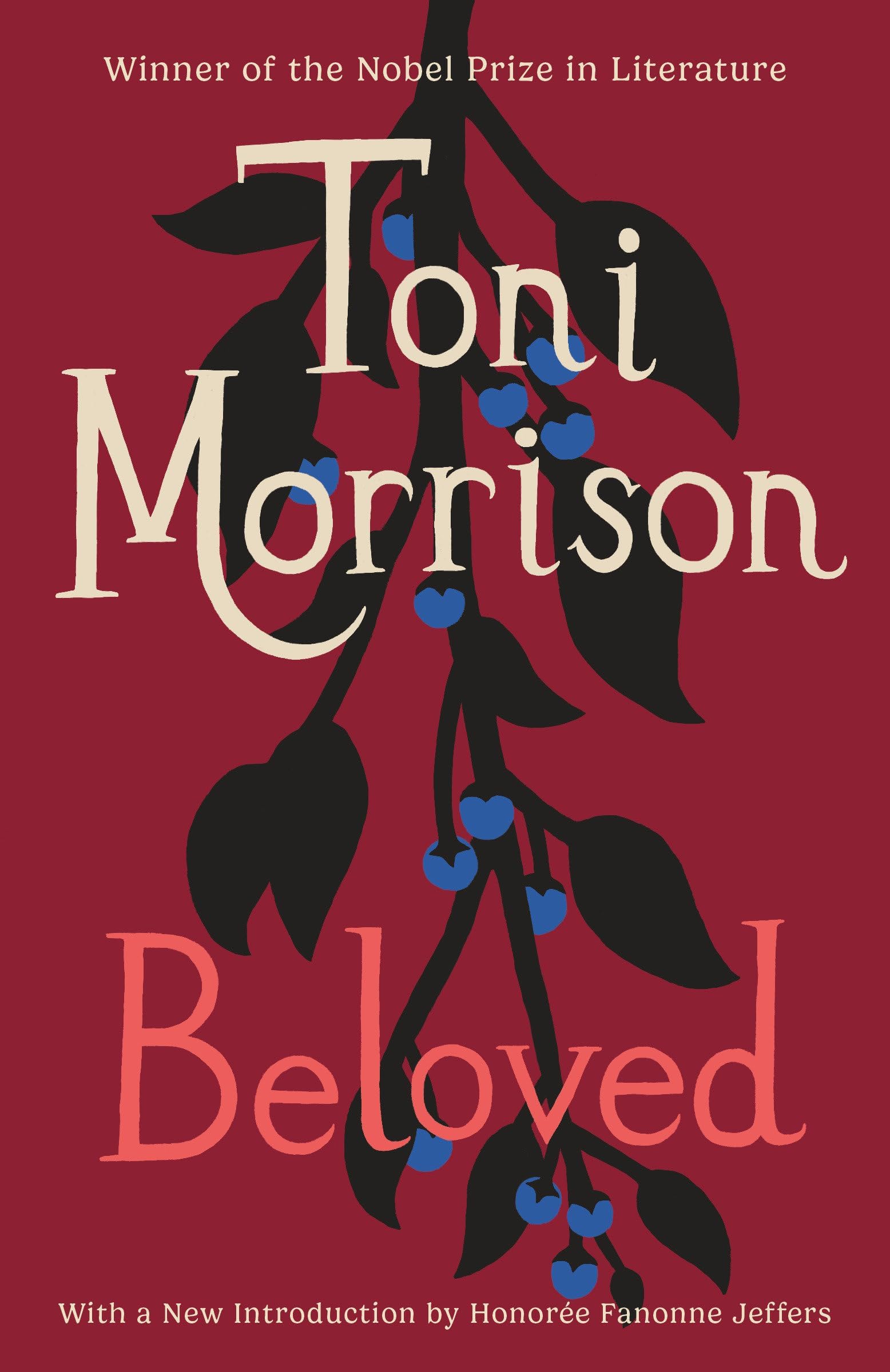
Beloved: Pulitzer Prize Winner (Vintage International)
Product ID: 1961445
🏆Pulitzer Prize Winner
📚Classic American Literature
🔥Controversial & Culturally Impactful
Buy anything from 5,000+ international stores. One checkout price. No surprise fees. Join 2M+ shoppers on Desertcart.
Desertcart purchases this item on your behalf and handles shipping, customs, and support to Congo.
🏆 Dive into the Pulitzer Prize-winning classic that everyone’s talking about — don’t miss out on the literary event of a lifetime!
Beloved by Toni Morrison is a Pulitzer Prize-winning novel acclaimed as one of the greatest American works of fiction in recent decades. Known for its poetic language and complex narrative structure, it explores the haunting legacy of slavery through the story of a runaway slave mother and her family. Despite its challenging style, it remains a vital cultural touchstone, frequently studied and debated for its profound impact on American literature and social discourse.

| Best Sellers Rank | #791 in Books ( See Top 100 in Books ) #14 in Contemporary Literature & Fiction #19 in Coming of Age Fiction (Books) #77 in Literary Fiction (Books) |
| Customer Reviews | 4.4 out of 5 stars 20,146 Reviews |
N**G
I Love Toni Morrison!
Beloved by Toni Morrison “Something that is loved is never lost.” ― Toni Morrison, Beloved In observation of Banned Books Week 2023, I decided to treat myself and reread Beloved by my favorite author, Toni Morrison. In 1988, Beloved received the Pulitzer Prize for Fiction, as well as the Robert F. Kennedy Memorial Book Award, the Melcher Book Award, the Lyndhurst Foundation Award, and the Elmer Holmes Bobst Award. When the Nobel Prize in Literature was awarded to Toni Morrison in 1993, it was said that her novels were characterized by " visionary force and poetic import” and that she “gives life to an essential aspect of American reality." In 2006, a survey of writers and literary critics compiled by The New York Times ranked Beloved as the best work of American fiction from 1981 to 2006. Toni Morrison’s Beloved has been the object of challenges in school districts and public library systems across the country. For instance, in 2022, the Protect Nebraska Children Coalition brought an extensive list of books to the Wauneta-Pallisade (NE) Public Schools board meeting and wanted the books removed from both the elementary and high school libraries. This list of more than 30 titles includes Beloved. All books were subsequently removed for evaluation. In 2016, Beloved was challenged but retained as an optional summer reading choice in the Satellite Beach (FL) High School Advanced Placement classes. A parent admitted that he had not read the entire book when he addressed the committee, but wanted the book banned because of what he called “porn content.” In 2013, Beloved was challenged but retained as a text in Salem (MI) High School Advanced Placement English courses. The complainants cited the allegedly obscene nature of some passages in the book and asked that it be removed from the curriculum. District officials determined the novel was appropriate for the age and maturity level of Advanced Placement students. In reviewing the novel, the committee also considered the accuracy of the material, the objectivity of the material, and the necessity of using the material in light of the curriculum. Scholars say one of the reasons Toni Morrison’s books are controversial is because they address dark moments in American history that can be uncomfortable to talk about for some people. Beloved, for example, was inspired by The Margaret Garner Incident of 1856. Margaret Garner was born into slavery on June 4, 1834, on Maplewood Plantation in Boone County, Kentucky. Working as a house slave for much of her life, Garner often traveled with her masters and even accompanied them on shopping trips to free territories in Cincinnati, Ohio. After marrying Robert Garner in 1849, Margaret bore four children by 1856. At this time, the Underground Railroad was at its height in and around Cincinnati, transporting numerous slaves to freedom in Canada. The Garners decided to take advantage of such an opportunity to escape enslavement. On Sunday January 27, 1856, they set out for their first stop on their route to freedom, Joseph Kite’s house in Cincinnati. The Garners made it safely to Kite’s home on Monday morning, where they awaited their next guide. Within hours, the Garners’ master, A.K. Gaines, and Federal marshals stormed Kite’s home with warrants for the Garners. Determined not to return to slavery, Margaret decided to take the lives of herself and her children. When the marshals found Margaret in a back room, she had slit her two-year-old daughter’s throat with a butcher knife, killing her. The other children lay on the floor wounded but still alive. The Garners were taken into custody and tried in what became one of the longest fugitive slave trials in history. During the two-week trial, abolitionist and lawyer, John Jolliffe, argued that Margaret’s trips to free territory in Cincinnati entitled her and her children to freedom. Although Jolliffe provided compelling arguments, the judge denied the Garners’ plea for freedom and returned them to Gaines. He relocated the Garners to several different plantations before finally selling them to his brother in Arkansas. Emily Knox, author of Book Banning in 21st-Century America, states of Toni Morrison’s body of work, that: “What she tried to do is convey the trauma of the legacy of slavery to her readers. That is a violent legacy. Her books do not sugarcoat or use euphemisms. And that is actually what people have trouble with.” Dana A. Williams, President of the Toni Morrison Society and Dean of Howard University’s graduate school says: “Toni Morrison’s books tend to be targeted because she is unrelenting in her belief that the very particular experiences of Black people are incredibly universal. Blackness is the center of the universe for her and for her readers, or for her imagined reader. And that is inappropriate or inadequate or unreasonable or unimaginable for some people.” Toni Morrison often spoke out against censorship, both of her work and more broadly. Her comments in the introduction of Burn This Book, a 2009 anthology of essays she edited on censorship issues, are especially appropriate for today. “The thought that leads me to contemplate with dread the erasure of other voices, of unwritten novels, poems whispered or swallowed for fear of being overheard by the wrong people, outlawed languages flourishing underground, essayists questions challenging authority never being posed, unstaged plays, canceled films—that thought is a nightmare. As though a whole universe is being described in invisible ink.” In September 2022, as part of New York Public Library’s Banned Books Week celebration, the NYPL honored Toni Morrison. Her words printed below are engraved on one of its walls at its flagship location on 42nd Street. Access to knowledge is the superb, the supreme act of truly great civilizations. Of all the institutions that purport to do this, free libraries stand virtually alone in accomplishing this mission. No committee decides who may enter, no crisis of body or spirit must accompany the entrant. No tuition is charged, no oath sworn, no visa demanded. Of the monuments humans build for themselves, very few say 'touch me, use me, my hush is not indifference, my space is not a barrier.' If I inspire awe, it is because I am in awe of you and the possibilities that dwell in you. Resources Toni Morrison on writing 'Beloved' (1987 interview) Toni Morrison talks to Peter Florence Toni Morrison on Beloved | Hay Festival Why should you read Toni Morrison’s “Beloved”? - Yen Pham "Beloved" - Banned Books Week 2021 Readout: Beloved - Banned Books Week 2020 Banned Books Conversations - Beloved by Toni Morrison
W**I
Honors 101
Beloved by Toni Morrison is a dramatic historical fiction published in 1987 by Vintage Books. Morrison is an award-winning author of such prizes as the Nobel Prize in literature, the Pulitzer Prize, and many more. This novel was written with the purpose of exhibiting not only the horrors of slavery but also the psychological consequences it had on those who became free. Beloved adequately conveys these themes through the perspective of Sethe, a woman who was enslaved for most of her life and who tries desperately to run from her past once she achieves freedom. Reasons for Sethe’s grief include the mysterious death of her baby after whom the book was named as well as the everlasting feeling of repression that her owners instilled in her during her time on the plantation “Sweet Home” in Kentucky. Sethe’s issues also extend into her relationships. Her daughter, Denver, is constantly suspicious of new people who enter her mother’s life and constantly searches to learn more about her family’s history-a history her mother has worked desperately to forget. Sethe’s new lover, Paul D, who was also a slave at Sweet Home is extremely supportive of her strife. However, he cannot get her to forget about her true love Halle, who was separated from her when they left the plantation. Throughout the novel Beloved we as the readers see how Sethe evolves and accepts her past while more fragments of her past are explained. The significance of the title Beloved is that this word was engraved on Sethe’s dead child’s tombstone. Throughout the book this significance becomes even more relevant. Many themes are present in this novel, though I feel the most important ones are running from the past and inferiority. From the early chapters of the book, it is clear that Sethe has faced some horrible situations including the death of her infant child and her abuse as a slave. The scars on Sethe’s back serve to symbolize the permanent effects that her past in slavery has on her present as a freed woman. The theme of inferiority is displayed many times throughout the book, but the character who faces this the most is Paul D. Paul D grew up with two half-brothers, both of which shared the same name Paul, but with an A and an F. Two words I would use to describe Beloved are uncomfortable and confusing. Though these words have negative consequences, I believe this was Morrison’s intentions. I felt uncomfortable throughout the novel because of the excessive amounts of rape and because of some of Sethe’s decisions throughout some of the later chapters. Though these are unsettling events in the book, they are also very important to convey the atrocities that slaves were subject to. Of course, I could never imagine what it was truly like to be a slave, but I think Morrison accurately depicted the extreme physical and mental tolls slavery had on its victims. I also found Beloved to be very confusing because of its constant transition between Sethe’s time as a slave on the Sweet Home Plantation in Kentucky and her time as a freed slave in Cincinnati. This is not a criticism but simply encouragement to read the book a second time in order to develop a more thorough understanding. Morrison’s utilization of constant flashbacks served to add a level of suspense to Sethe’s life story. Beloved is an incredible depiction of life after slavery and the relationships one would make through it. I recommend this novel to people of all ages, but I feel like it is particularly important for white children to read. Slavery is a subject that is prevalent in every African American household even today, including many stories of the horrors their ancestors faced. Though I learned about slavery all through school, I was never able to put myself in the mind of a slave. For someone like me whose family never had to deal with any of it, it was especially mortifying. Beloved can be found on Amazon.com for $12.43 and free shipping with Amazon Prime.
A**A
Excellent Piece of Literature
I am excited to have my own copy of this to re-read for college, having previously studied it during high school. Beloved is an intense, non-linear story that I ended up adoring thanks in much part to my AP Lang teacher’s guidance, and I am not sure I would have understood things nearly as well without her. The book arrived quickly and in good condition. Beloved addressed sensitive topics as part of its narrative, so be cognizant and do some research before reading if you are not familiar with the nature of the text
T**Y
A must read for everyone
I am in awe at the brilliance of Toni Morrison, you can feel her through the pages. The book is healing, insightful, and dripping with a genius ability to re-create an experience through the command of language. So so grateful for this piece of literature.
C**A
Difficult, But a Must-Read
This novel was rated by the New York Times as the best American novel of the last 25 years and has been accorded the status of a classic great American novel. This amount of hype, Morrison's iconic status, and the difficulty of the book can cause a great amount of skepticism in the reader. One wants to hate the book and toss it aside. It took me quite a while to warm to the book, and I did almost toss it aside at points. It is not an easy read. Morrison could have structured her narrative in a more readable way, but she deliberately chose not to. The story of the runaway slave-mother's tragic loss of her daughter is too painful to be told in this fashion. So it's done episodically, with flashbacks, and with the device of the sudden appearance of a stray girl who is taken in as a new daughter with growing suspicions as to her being a reincarnation. There are very good reasons for Morrison to tell the tale in this fashion. The events of the slave era, after all, exist only in racial memory, and a 21st century reader can best approach the horrors of the times by peeling back the layers of memory. This is exactly how Morrison tells her story, and it does resonate. Also, it is apparent that Morrison is skilled in the oral traditions of a culture that didn't tell legends in a linear manner. So, the reader has to put aside his/her frustrations with the difficulty of this approach and appreciate the writer's need to tell the tale in this fashion. And it helps that the story becomes a lot clearer as you slog through the narrative. Morrison's language is quite remarkable. It is at times poetic. She can capture the character and look of a person in a few striking sentences. It's really some of the best writing I've read for some time. So, the book does live up to the hype. It's a classic work that has to be re-read and that probably has to be studied in a literature class to appreciate fully. I heard one critic say that this was the book he'd bring to a desert island. No way. It's not the kind of book one falls in love with. And for me, I connect better emotionally with Banks' and Oates' novels as well as O'Brien's "The Things They Carried." I'd probably rate those books as better than Morrison's in a contest to name the best American work of fiction over the past 25 years. Still, some of Morrison's characters, particularly "Paul D", are unforgettable and quite attractive. But in the end, I can't fall in love with this book any more than I could fall in love with "Ulysses." The book is a must-read for those wanting to be literate in recent American fiction.
K**I
Difficult to follow on audiobook
Beloved was published in 1987 and is set after the American Civil War (1861–1865). According to Wikipedia: "it is inspired by the life of Margaret Garner, an African American who escaped slavery in Kentucky in late January 1856 by crossing the Ohio River to Ohio, a free state. Captured, she killed her child rather than have her taken back into slavery. Morrison had come across an account of Garner, "A Visit to the Slave Mother who Killed Her Child" in an 1856 newspaper article published in the American Baptist, and reproduced in The Black Book, a miscellaneous compilation of black history and culture that Morrison edited in 1974." The story explores slavery and self-image as a freed slave from the perspective of Sethe, the book's protagonist. Sethe was born a slave, escaped to Ohio (Morrison's home state) and currently lives with her almost grown daughter in a house that is haunted by the spirit of Sethe's dead baby, buried nameless with a headstone marked "Beloved." This was my first Toni Morrison book and I found it to be very difficult to follow, made even more challenging, I think, by Ms. Morrison narrating her book. After listening to Ms. Morrison narrate both this and her first novel, The Bluest Eye, I think the narration detracts from my ability to appreciate the book and will find the time to read both this and Bluest Eye in traditional in-print format to see if I can enjoy and follow the stories better.
A**R
*****SPOILER ALERT*******
In Toni Morrison’s novel Beloved, Sethe, a runaway slave, has spent the last sixteen years of her life free from Sweet Home, the farm in which she was enslaved. She runs away-- pregnant with her fourth child-- and on the way to her husband’s mother’s house in Ohio. Morrison’s novel reveals that slavery and family will never coexist. Older, wiser characters warned Sethe that she should not love her children so hard because they will most likely be taken from her. Baby Suggs, Sethe’s mother-in-law and a freed slave, had developed this mentality with her children remembering that “the last of her children, whom she barely glanced at when he was born because it wasn't worth the trouble to try to learn features you would never see change into adulthood anyway.” Sethe finally realizes she and her family will never truly be free from enslavement when her owner comes to collect her and her children. Sethe makes the decision that killing her four children herself would be a better loss then letting them go back to Sweet Home. It is either the most painful sacrifice a mother could ever make or the unreasonable actions of a woman who has been destroyed by the disgusting institution of slavery. Sethe didn’t succeed at killing all of her children for she only killed one, her baby girl soon known as Beloved. After Sethe’s two sons ran away, the house, 124 Bluestone Road, was only home to Sethe, Denver (her fourth child), and the ghost of the baby girl. Morrison uses the ghost to act as the physical burden of the past has on Sethe and her daughter’s life calling the house it haunted “spiteful” and [f]ull of a baby’s venom.” With the character Beloved, Morrison explores one of the novel’s central themes: how can a human being move past the most horrific memories of slavery. In this case, Sethe must not only overcome slavery’s violence on her body but also the overwhelming trauma that comes from killing one’s own baby to prevent her from experiencing the same violence Sethe endured. Morrison utilizes the ghost as constant and haunting reminder of Sethe’s actions and slavery’s imprint on the body and mind. Rather than creating an intangible set of painful memories, Beloved is a tangible and “spiteful” reminder of Sethe’s actions. She is not allowed to forget the past. Her daughter slowly drains the life away from Sethe: starving her and turning her eyes “bright but dead.” Yet, Morrison notes that anything “dead coming back to life hurts" and that, in order for Sethe to live a life outside of slavery, she must overcome the act of killing because “it left her no room to imagine, let alone plan for, the next day.” Ultimately, Beloved and the act of killing is not something that should be relived and remembered; rather, Morrison seems to suggest that it should be “disremembered.” This was “not a story to pass on”. Instead, Sethe must move on. The past is too ugly and the scars on her back are too profound. Of course, we can’t all relate to the horrific pain that Sethe must endure in her life. Yet, trauma and the memories embedded in trauma are real for so many of us. From soldiers returning from Iraq or Afghanistan or Somalia or Syria or any number of frightening conflicts to women who are still too often victims of sexual violence, we have to find ways to overcome the pain and discover ways to live. The novel Beloved is a magical, horrific, beautiful and ugly story of death, extreme love, slavery, and redemption that touches on our most powerful emotions: familial love, overwhelming anger, deepest regret, and the yearning for peace. This is why I give Beloved FIVE STARS.
C**.
A story of redemption
I selected Beloved as one of my #BannedBookWeek reads for September 2019. This isn't my first read by the G.O.A.T. Ms. Toni Morrison, it is my most recent read of hers in the personal growth journey I'm on. This wasn't a personal growth read, but it certainly does fit in that category for me. Brief Synopsis: Morrison sets out to show how deep the effects of slavery goes. Slavery, in some cases, was able to completely shatter the black family. Sethe's story is just one of the countless stories that are out there. While this is a work of fiction, it has ties to a true-story. Ms. Morrison gives voices to many people: mothers, fathers, children, grandparents, and brothers/sisters. The most important voice she writes for is that of the victim. So many times we focus on the justification of heinous acts and ignore the victim. I applaud her for this, because she did it so masterfully. While giving all these voices, she also gives a testament to the strength of the Black Woman even when such a woman doesn't realize it. The novel definitely tugs at your heart but that's what reality does. Will Sethe find her peace, what really happened, can a family survive after taking its freedom? Read this book to find out. I now speak on what spoke to my soul. I recently listened to a podcast by two talented black indie authors (Bookish Brown Girls). They chose to speak on Ms. Toni Morrison as we have lost the literary great that she will always be. In their podcast they relate quotes she said, their favorite works of art by her. One quote came from this book regarding love. Paul D. told Sethe her love was too thick. Her response was, "Love is or it ain't. Thin love at love at all"(Part 1, p. 194, par 1). It made me think about a mother's love and how deep it goes. Sometimes it's at a fault but with Sethe one thing she knew for sure, she was going to protect the only thing she had claim to in her eyes. While the slavery we read about no longer exists, the remnants of it does. I ask myself, how far will I go to protect my own? Reading this novel can make a person look at life from a different perspective. You may not agree with the message and that is your right. What is not your right, is to judge someone else's actions. Try walking in their shoes, your decision-making just might change. The next idea that spoke to my soul I already mentioned in the synopsis, the strength of the Black Woman. Sethe, Denver, Baby Suggs, and even Beloved. All of them displayed varying degrees of strength. Looking at these woman helped me see both the strength I have and the strength I don't have. This is the main reason I view this book as a personal growth read. My vision of myself, me working to be the best version of me. Ms. Toni Morrison exposed another level of myself I didn't realize I felt or believed to be true. For this I thank her and know my path is becoming clearer. The final idea that spoke to my soul was that of redemption. There were many characters who were looking for or even avoiding redemption. Sometimes it comes easily, most times it doesn't. This is because you have to be honest with yourself. This I believe is one of the hardest things to do in life. You can hide it from others, but you can't hide it from yourself. Your conscience won't allow it. I close this review with the question: Be honest with yourself, what redemption are you in search of? As Always, #HappyReading Tracey Robinson Words For The Soul Book Club
R**I
Good
Good
M**.
Très bon
J’ai reçu le livre dans un très bon état, je recommande ! L’histoire est tout à fait prenante et nous fait nous poser tout un tas de questions morales. Toni Morrison a une plume absolument superbe et mérite d’être plus connue internationalement que ce qu’elle est !
F**L
quality
perfect condition, original book, quick shipping
L**A
This is a must read!
Wow this is a must read… a masterpiece!
M**H
One of the classics
Toni Morrison is no ordinary writer and Beloved is one of her masterpieces. It is a must read for book lovers as it is a blend of history, psychology and fiction. The book delivered to me was of good quality, including the quality of the pages and print. Good job Amazon, keep it up!
Trustpilot
1 month ago
1 month ago