

Masterminds and Wingmen: Helping Our Boys Cope with Schoolyard Power, Locker-Room Tests, Girlfriends, andthe New Rules of Boy World
Product ID: 3439814
Buy anything from 5,000+ international stores. One checkout price. No surprise fees. Join 2M+ shoppers on Desertcart.
Desertcart purchases this item on your behalf and handles shipping, customs, and support to Congo.
A landmark book that reveals the way boys think and that shows parents, educators and coaches how to reach out and help boys overcome their most common and difficult challenges -- by the bestselling author who changed our conception of adolescent girls. Do you constantly struggle to pull information from your son, student, or athlete, only to encounter mumbling or evasive assurances such as “It’s nothing” or “I’m good?” Do you sense that the boy you care about is being bullied, but that he’ll do anything to avoid your “help?” Have you repeatedly reminded him that schoolwork and chores come before video games only to spy him reaching for the controller as soon as you leave the room? Have you watched with frustration as your boy flounders with girls? Welcome to Boy World. It’s a place where asking for help or showing emotional pain often feels impossible. Where sports and video games can mean everything, but working hard in school frequently earns ridicule from “the guys” even as they ask to copy assignments. Where “masterminds” dominate and friends ruthlessly insult each other but can never object when someone steps over the line. Where hiding problems from adults is the ironclad rule because their involvement only makes situations worse. Boy world is governed by social hierarchies and a powerful set of unwritten rules that have huge implications for your boy’s relationships, his interactions with you, and the man he’ll become. If you want what’s best for him, you need to know what these rules are and how to work with them effectively. What you’ll find in Masterminds and Wingmen is critically important for every parent – or anyone who cares about boys – to know. Collaborating with a large team of middle- and high-school-age editors, Rosalind Wiseman has created an unprecedented guide to the life your boy is actually experiencing – his on-the-ground reality. Not only does Wiseman challenge you to examine your assumptions, she offers innovative coping strategies aimed at helping your boy develop a positive, authentic, and strong sense of self. Review: Every Parent of a Boy Needs This Book (Even If They Think They Don’t) - Masterminds and Wingmen is one of the most important books I’ve read about boys, friendship, and the hidden social world that adults often completely miss. As an educator and a parent, I found myself nodding constantly—because she puts words to dynamics I’ve seen play out for years: loyalty, teasing that crosses the line, peer pressure, “bro code” culture, and the complicated ways boys try to earn belonging without admitting they even care. What I appreciate most is that Wiseman doesn’t demonize boys. She doesn’t reduce them to stereotypes or treat them like emotional robots. Instead, she explains the real pressures they’re navigating and gives adults a practical way to support them without lecturing or overreacting. This book is full of insight, real examples, and concrete guidance on how to talk to boys about respect, identity, social hierarchy, masculinity, and friendships. It’s honest, intelligent, and incredibly useful. If you’re raising a son, teaching boys, coaching, or working with adolescents in any way, this is a must-read. It will change how you interpret what’s happening under the surface. Highly recommended. Review: I'm not a parent, but I found it insightful and compelling - Even though I'm not a parent, I read Rosalind Wiseman's Queen Bees and Wannabes and loved it. If adults are honest with ourselves, we will see that many times our adult relationships share many features with those of our younger selves. How often have you seen someone post on Facebook regarding their workplace, "I thought I was out of high school!" ? So while these books may have been written to address the issues of adolescents, they are just as applicable to those of us who are long past that age. As Dr. Phil said the other day, we as adult talk about kids as though we have had nothing to do with who they turn out to be. Wiseman is aptly named (well, she would be a wise woman, but I digress.) She has really paid attention to the interactions between kids, between girls, between boys, between parents, and between parents and kids. Of course Queen Bees resonated with me because I'm a girl and I've been in both the bullied and the bully position as a kid and probably yes, as an adult, as much as I hate to admit it (about being the bully.) I wasn't diagnosed with ADD until the ripe old age of 41, and having untreated ADD means that my reactions and comments were sometimes said in the heat of the moment, without thought. Now that I'm being treated, I no longer have that issue. With Masterminds and Wingmen, this was a fascinating look into Boy World. Now, I had already figured out some things on my own. I was raised to believe that boys didn't have the same kind of relationships or feelings that girls do. But I noticed that a lot of men did have those kind of friendships with both men and women. And so it led me to believe (correctly) that many of the stereotypes I'd been told about men and women were incorrect. As Wiseman points out, just because a boy says he's fine, it doesn't necessarily mean that he is. There is much more going on than meets the eye. Wiseman offers up a lot of tools for dealing with just about every situation that could come up - and these are ones that adults could use as well. How often do we tell employees to "Do the right thing" or "Be a good employee" without defining what those are? As humans we approach everything from a point of our own experiences and history - which means that we end up holding people to standards they may not have encountered before. It's the same thing when we tell kids to "Do the right thing" or "Don't get into trouble" without laying out the parameters of what that means. She also uses a strategy called SEAL,which assists with conflict resolution. This is another technique adult could use. 1. Stop and Set it Up: Assess the situation, i.e what happened? Should I confront the person now or later? 2. Explain: State the problem and what you would like to happen or do. 3. Affirm and Acknowledge: Affirm your right to be treated with dignity and acknowledge anything you've done to contribute to the issue. 4. Lock in (or out): Determine the status of the relationship going forward. I also love that she points out that when you ask someone else what their perception is, "you must be ready to be changed by what you hear." To me, that's one of the most powerful statements. Because if you're not truly ready to hear something, you won't be able to accept what the other person is saying and you won't be able to see their point of view. Some highlights (there's no way I can share all of the great moments in this book - I have 26 pages of highlights.) *The closest we've come to recognizing boys' issues is in our discussions of teen suicides, which we generally attribute to homophobia and lack of gun control. *What's way more useful for boys is to talk to them about integrity looks like to you under duress. *He isn't running to play that video game for no reason. He's running to distract himself from the shame he feels that he was ridiculed for his body, from his deeply wired believe that he can't tell you what happened, and it feels good to shoot something that he can pretend is his tormentor. *My colleagues in college admissions tell me that the ratio of male applicants to female applicants has continued to weaken so much that now they believe that for every eight qualified female applicants there are only two male applicants....So while people are worried about racial affirmative action, the biggest affirmative action problem is right in front of us. *No matter how physically hurt he is, Batman shakes it off If he's angry, he either clenches his jaw or exacts revenge with utter physical domination. *It's about understanding that power and privilege are at work when one person believes he has the right to speak for everyone and no one contradicts him. *To equate speaking out about abuse of power and social injustice with being sexually attracted to other men makes no sense. If it did, heterosexual men would be defined as those who do nothing or who join in when someone's being abused. Then only gay men would have the courage to stand up. *Our boys deserve meaningful relationships, the freedom to pursue what interests and challenges them, a feeling of belonging and social connection to others, and a sense that they're contributing to something larger than themselves. Those four criteria make up the definition of happiness. *From the moment our children realize they are separate entities from us and realize that we will often stop them from doing what they want, they carefully study us to figure out how to get their way. *We are forced to come face-to-face with our acceptance of violence as entertainment in other areas. Since many of us find that hard to acknowledge, we point to video games as the problem. *There is no video game in history that can approach the level or intensity of violence present in the Old Testament. *If he gets caught violating a technology or alcohol or drug policy, he (and even you) may think the rules are stupid or unfairly applied, but he agreed to those rules by becoming a participating member of the community. *"What is the difference between what you do and who you are? If you repeat certain types of disrespectful or dishonest actions, at what point do you become a disrespectful or dishonest person?" *Kids, including the most entitled and abusive athletes, don't go after other kids unless they know that adult "leaders" in their school don't or can't hold them accountable. *You can't take away someone's experience, but you can say that his personal experience doesn't reflect the reality of all girls, and you should advise him not to make it generalized blanket statements. If I had the funds, I would buy this for everyone I know. I really can't think of a single person, group, or company that wouldn't benefit from this.
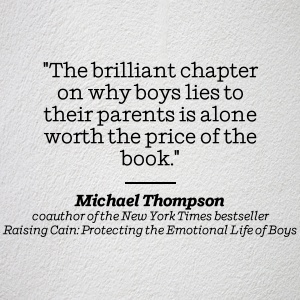
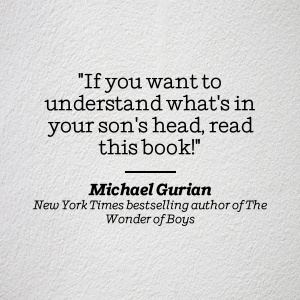

| Best Sellers Rank | #48,887 in Books ( See Top 100 in Books ) #56 in Parenting Teenagers (Books) #63 in Parenting Boys #89 in Popular Child Psychology |
| Customer Reviews | 4.6 out of 5 stars 581 Reviews |
V**M
Every Parent of a Boy Needs This Book (Even If They Think They Don’t)
Masterminds and Wingmen is one of the most important books I’ve read about boys, friendship, and the hidden social world that adults often completely miss. As an educator and a parent, I found myself nodding constantly—because she puts words to dynamics I’ve seen play out for years: loyalty, teasing that crosses the line, peer pressure, “bro code” culture, and the complicated ways boys try to earn belonging without admitting they even care. What I appreciate most is that Wiseman doesn’t demonize boys. She doesn’t reduce them to stereotypes or treat them like emotional robots. Instead, she explains the real pressures they’re navigating and gives adults a practical way to support them without lecturing or overreacting. This book is full of insight, real examples, and concrete guidance on how to talk to boys about respect, identity, social hierarchy, masculinity, and friendships. It’s honest, intelligent, and incredibly useful. If you’re raising a son, teaching boys, coaching, or working with adolescents in any way, this is a must-read. It will change how you interpret what’s happening under the surface. Highly recommended.
A**E
I'm not a parent, but I found it insightful and compelling
Even though I'm not a parent, I read Rosalind Wiseman's Queen Bees and Wannabes and loved it. If adults are honest with ourselves, we will see that many times our adult relationships share many features with those of our younger selves. How often have you seen someone post on Facebook regarding their workplace, "I thought I was out of high school!" ? So while these books may have been written to address the issues of adolescents, they are just as applicable to those of us who are long past that age. As Dr. Phil said the other day, we as adult talk about kids as though we have had nothing to do with who they turn out to be. Wiseman is aptly named (well, she would be a wise woman, but I digress.) She has really paid attention to the interactions between kids, between girls, between boys, between parents, and between parents and kids. Of course Queen Bees resonated with me because I'm a girl and I've been in both the bullied and the bully position as a kid and probably yes, as an adult, as much as I hate to admit it (about being the bully.) I wasn't diagnosed with ADD until the ripe old age of 41, and having untreated ADD means that my reactions and comments were sometimes said in the heat of the moment, without thought. Now that I'm being treated, I no longer have that issue. With Masterminds and Wingmen, this was a fascinating look into Boy World. Now, I had already figured out some things on my own. I was raised to believe that boys didn't have the same kind of relationships or feelings that girls do. But I noticed that a lot of men did have those kind of friendships with both men and women. And so it led me to believe (correctly) that many of the stereotypes I'd been told about men and women were incorrect. As Wiseman points out, just because a boy says he's fine, it doesn't necessarily mean that he is. There is much more going on than meets the eye. Wiseman offers up a lot of tools for dealing with just about every situation that could come up - and these are ones that adults could use as well. How often do we tell employees to "Do the right thing" or "Be a good employee" without defining what those are? As humans we approach everything from a point of our own experiences and history - which means that we end up holding people to standards they may not have encountered before. It's the same thing when we tell kids to "Do the right thing" or "Don't get into trouble" without laying out the parameters of what that means. She also uses a strategy called SEAL,which assists with conflict resolution. This is another technique adult could use. 1. Stop and Set it Up: Assess the situation, i.e what happened? Should I confront the person now or later? 2. Explain: State the problem and what you would like to happen or do. 3. Affirm and Acknowledge: Affirm your right to be treated with dignity and acknowledge anything you've done to contribute to the issue. 4. Lock in (or out): Determine the status of the relationship going forward. I also love that she points out that when you ask someone else what their perception is, "you must be ready to be changed by what you hear." To me, that's one of the most powerful statements. Because if you're not truly ready to hear something, you won't be able to accept what the other person is saying and you won't be able to see their point of view. Some highlights (there's no way I can share all of the great moments in this book - I have 26 pages of highlights.) *The closest we've come to recognizing boys' issues is in our discussions of teen suicides, which we generally attribute to homophobia and lack of gun control. *What's way more useful for boys is to talk to them about integrity looks like to you under duress. *He isn't running to play that video game for no reason. He's running to distract himself from the shame he feels that he was ridiculed for his body, from his deeply wired believe that he can't tell you what happened, and it feels good to shoot something that he can pretend is his tormentor. *My colleagues in college admissions tell me that the ratio of male applicants to female applicants has continued to weaken so much that now they believe that for every eight qualified female applicants there are only two male applicants....So while people are worried about racial affirmative action, the biggest affirmative action problem is right in front of us. *No matter how physically hurt he is, Batman shakes it off If he's angry, he either clenches his jaw or exacts revenge with utter physical domination. *It's about understanding that power and privilege are at work when one person believes he has the right to speak for everyone and no one contradicts him. *To equate speaking out about abuse of power and social injustice with being sexually attracted to other men makes no sense. If it did, heterosexual men would be defined as those who do nothing or who join in when someone's being abused. Then only gay men would have the courage to stand up. *Our boys deserve meaningful relationships, the freedom to pursue what interests and challenges them, a feeling of belonging and social connection to others, and a sense that they're contributing to something larger than themselves. Those four criteria make up the definition of happiness. *From the moment our children realize they are separate entities from us and realize that we will often stop them from doing what they want, they carefully study us to figure out how to get their way. *We are forced to come face-to-face with our acceptance of violence as entertainment in other areas. Since many of us find that hard to acknowledge, we point to video games as the problem. *There is no video game in history that can approach the level or intensity of violence present in the Old Testament. *If he gets caught violating a technology or alcohol or drug policy, he (and even you) may think the rules are stupid or unfairly applied, but he agreed to those rules by becoming a participating member of the community. *"What is the difference between what you do and who you are? If you repeat certain types of disrespectful or dishonest actions, at what point do you become a disrespectful or dishonest person?" *Kids, including the most entitled and abusive athletes, don't go after other kids unless they know that adult "leaders" in their school don't or can't hold them accountable. *You can't take away someone's experience, but you can say that his personal experience doesn't reflect the reality of all girls, and you should advise him not to make it generalized blanket statements. If I had the funds, I would buy this for everyone I know. I really can't think of a single person, group, or company that wouldn't benefit from this.
W**M
Very insightful book
Clearly this author has done her research, and she brings clarity of thought to her presentation. There is a lot of excellent perspective both in the subjects chosen and the suggestions given. I am a father and I could feel that she was writing more to a mother, yet that is not problematic for me, the material is strong in itself. A lot of the strength is in the specificity, looking at a particular behavior or situation, and searching out the motivations and how responses by the parent will be seen by the boy. There are many paragraph-long quotations given by boys in response to specific situational questions. They are good for the most part yet some seem to me to be too literate and conceptual to come directly from boys of that age. Without polishing them up. The one glaring absence for me was the failure to feed the boy what he needs to develop in the best way. As an example, empathy for others may be developed or neglected in childhood. And a failure there is of immense importance. To the contrary, the author seems very attuned to viewing the child as a separate being who has needs and merits guidance. But always from the outside. The parent-child interactions are transactional in nature, not developmental.
I**Z
The Ideal Book for Mothers, Teachers, and Women to Understand Boys and their Daily Dilemmas
This is one of my MOST HIGHLY RECOMMENDED BOOKS. I purchased this book for two reasons. I had read Rosalind Wiseman's other book, Queen Bees and Wannabees, which was ABSOLUTELY SUPERB; and I had a current student (boy) who was being physically bullied at school, and was looking for some new ideas on how to help him. Masterminds and Wingmen was equally good as her first book, and I did find a very small (but adequate) amount in this book (about two or three pages) which dealt with strategies to use when someone is being physically bullied. They were helpful in that I had not thought of them before. It covered IF you need to fight, the issues you really need to be aware of first. It also gave some suggestions toward solving the problem without fighting that I had not thought of before (and I speak as both a parent and a teacher of 30 years' experience). If you are looking for a book specifically on how to deal with boys' problems of physical bullying, I would have liked a LOT more on this subject, but so far, I haven't found any better book. At least what this book touched on was useful. Aside from the question of physical bullying, this book was FANTASTIC. I am a parent, but not of boys. I would recommend this book to any parent, and to EVERY TEACHER. I learned so many things that I had never even thought about. The most surprising chapters for me dealt with every aspect of video games. As a person with zero interest in video games, I learned all about why they are so important to elementary-school and middle-school boys. Several chapters cover every aspect of how boys relate to each other through video games, and how if one understands the characters and ideas in video games, how one can much better understand boys' thinking and mentality (and even married men's thinking and mentality). I now think I will try out a few video games--not because I'm expecting to love them, but because this experience will help me better relate to my young male pupils as a teacher. This book covers many, many different aspects of boys' culture, thinking, and daily dilemmas. It is the perfect book for girls and women to read in order to understand the culture of boys and men.
G**1
Book With Innformation long-Needed
I think it is a book that every parent with a son or any person who works with boys in any capacity should read. I have worked with young people most of my life and through various means have learned how much boys are taught not to express what they are really feeling, and how as a culture we have promoted that. In addition drugs, alcohol, and video addiction and other factors contribute to their ability to deaden themselves. Once they learn to open up and be able to be vulnerable to others their whole life can change. Many parents are at a loss on how to do this, and many young people have fathers who never learned either. They want to talk ; they need to talk, and often don't know how. As a parent or any adult in their lives, we can teach them how to do that. There is so much peer pressure as well as pressure from parents to perform, expectations the media sets, and pressure to fit the mold. This book offeres help and insight into the issues our boys face.
M**Y
Unscientific
Ms. Wiseman writes as a teacher, a mother and a lay researcher. For this book she apparently interviewed dozens of adolescents. But her lack of scholarly rigor is the real limitation of the book – she is unsuccessful in transcending her feminine, maternal viewpoint. In particular, her guidance for boys on forming relationships is written in ignorance of the size of young men's sexual ambitions. Additionally, she seems to be addressing the challenges of relatively undisciplined kids without much paternal support. For example, she advises how to respond to 15-year olds who sneak out of the house after bedtime. Most kids are immunized from this temptation by fear of their fathers' retribution. Ms. Wiseman's thesis seems to be that boys are softer on the inside than they appear. She describes a restriction, the "Act like a man box" of macho behaviors which is supposedly imposed on our sons by our culture and psychologically stunted men. While this analysis may permit many feminists to wag their tongues in agreement, it is not applicable to the teenagers I know. This book is really just a collection of opinions from a mom who has done very good homework. It will be most useful to single moms trying to understand relatively wild kids. Healthier families will use it less. The most useful insight I found was not about boys at all, it was about mothers, represented by Ms. Wiseman – she describes the physical and psychological insecurity that restricts her from confronting boys more vigorously.
K**R
Great read for parents, teachers, and coaches of boys
I have taught high school for 21 years and I have always been very successful teaching boys and I enjoy them a lot However, I felt I needed some different insight as I am raising my young son. This book has great and actionable advice for how to help your basically decent kid handle situations even better and, more importantly, advice for how to deal with your son if he isn't being basically decent. I especially liked the chapters about locker room culture and how to help your son deal with kids who have unusual behaviors. I work with a lot of non-neurotypical boys and the advice really rang true. The book has scripts for parents to follow in difficult conversations with their sons. I think it is especially important for women who are raising their sons alone or with little help because it explains how boys see power and how moms need to approach things so that they have power and their power is seen as legitimate instead of manipulative. Good stuff.
A**S
terrific advice for raising or teaching boys
I enjoyed this book very much. The author begins by making the case that boys have particular needs and problems. (She had previously written a book focused on girls, Queen Bees and Wannabes.) She examines cultural demands and peer pressure on boys, and then proceeds to give ideas about how to talk to boys at different ages, how to reach them, and what their concerns probably are. The author is a little too fond of coining names and phrases, and toward the end the book becomes repetitive, but despite that this is a truly valuable resource for parents and teachers of boys, and the many quotes from boys themselves are really enlightening. With chapters on body mage, anger, lying, gaming, social media, girls, role models, etc., there is a lot of good and relevant advice here. Highly recommended.
D**D
clear informative and important
We are in a masculinity mess, a time where boys are failing in their education, social and work lives, faced with an array of social and cultural expectations that as parents we have a duty to be aware of and respond to sensitively. This book is an essential read for those parents who want to know better to do better. No matter how old your son is (or interested parents of girls) this book will help make sense of their world, stripping back the hysteria of suspecting our children are deviants or the naivety of imagining them angels. A book to help us hold our boys hands as they grow into men.
T**A
This is an EXCELLENT read for any teacher or parent
This book touches on the hot topics, taboo topics and the dialogue that parents, teachers, friends can use to re-direct kids onto the path of being successful, creating healthy boundaries, growing healthy self-esteem, celebrating individuality and most importantly making decisions when the pressure is almost too much. This is an EXCELLENT read for any teacher or parent.
N**E
An excellent resource for the elementary counselling office
An excellent resource for the elementary counselling office! This is a book I keep in my personal library and often recommend to parents.
C**N
good reading
gift appreciated
M**Z
Five Stars
This is a very informative book. Delivered very quickly.
Trustpilot
5 days ago
2 weeks ago