Six Records of a Floating Life (Penguin Classics)
Product ID: 3508473
Buy anything from 5,000+ international stores. One checkout price. No surprise fees. Join 2M+ shoppers on Desertcart.
Desertcart purchases this item on your behalf and handles shipping, customs, and support to Congo.
Six Records of a Floating Life (1809) is an extraordinary blend of autobiography, love story and social document written by a man who was educated as a scholar but earned his living as a civil servant and art dealer. In this intimate memoir, Shen Fu recounts the domestic and romantic joys of his marriage to Yun, the beautiful and artistic girl he fell in love with as a child. He also describes other incidents of his life, including how his beloved wife obtained a courtesan for him and reflects on his travels through China. Shen Fu's exquisite memoir shows six parallel "layers" of one man's life, loves and career, with revealing glimpses into Chinese society of the Ch'ing Dynasty. For more than seventy years, Penguin has been the leading publisher of classic literature in the English-speaking world. With more than 1,700 titles, Penguin Classics represents a global bookshelf of the best works throughout history and across genres and disciplines. Readers trust the series to provide authoritative texts enhanced by introductions and notes by distinguished scholars and contemporary authors, as well as up-to-date translations by award-winning translators. Review: The Ordinary Life of an Imperfect Man - I am constantly looking for classics of Asian literature to expand my knowledge of this area. Chinese literature, I will admit from the beginning, is not my forte. I have read Mo Yan, Gao Xingjian, Ma Jian, Bei Dao, Lao She, and Lu Xun. The first volume of Cao Xueqin’s _Story of the Stone_ awaits on one of my bookshelves. Penguin has never disappointed me, and so every volume of Asian literature they have published is automatically on my mental list of books to read. This translation of Shen Fu’s early eighteenth-century work _Six Records of a Floating Life_ was first published in 1983, but surprisingly I was not aware of it until I came across a copy at local bookstore. While the book was not exactly what I was expecting, I was pleasantly surprised by these memoirs of a flawed bureaucrat. So, what *was* I expecting? Judging by the title, which comes from a poem by Li Po, I assumed this was going to be a text of great philosophical depth, a series of meditations on the transitory nature of human life and the passing of things. _Six Records of a Floating Life_ is not contemplative, nor is it narrative. This is, for the most part, a descriptive work. Through the author’s comments on, for instance, the passing of one the people close to him, we get a sense of pathos, but I was expecting more meditative passages. I kept waiting for philosophical insight as I turned the pages. Eventually I stopped fighting the text and adapted to it. Here was a great opportunity, I told myself, to learn what life was like for an eighteen-century Chinese government-office secretary. Shen Fu does not present his life in chronological order. This may be a challenge or a refreshing variant. The memoirs are divided into four parts, which deal with the married life, leisure, misfortune, and travel, respectively. The complete text of _Six Records of a Floating Life_ has not survived, hence the four sections. As the translators point out in the introduction and the appendices, the two additional chapters “discovered” later and published in the 1930s are literary forgeries. Parts I and III, on the married life and misfortune, were my favorites. If one reads _Six Records of a Floating Life_ as Shen Fu and his wife Yün’s love story, the first section of the book is of course the most interesting. This is not, however, a typical (Western) romantic story. As the translators discuss in the introduction, Shen Fu was far from perfect as a husband/lover. That is all I will say, so as not to spoil the text for you. The third section is, not surprisingly, the most pathetic in the literal sense of the word: loss and mourning are its main themes. Part II, the shortest section, which begins with a lengthy description of flower arrangement, didn’t really touch me, and part IV is too descriptive for my taste, though the evocations of places are quite vivid. The introduction and notes by translators Leonard Pratt and Chiang Su-hui are incredibly valuable. I like my introductions brief and to the point. This book’s foreword is only 6 pages long, but it touches upon various topics: the text as a love story, the role of concubines, Shen Fu’s character and shortcomings, the work of the private secretary and specifically what type of secretary Shen Fu was, and the structure of the text. Regarding the notes, there are 101 of them (to a 120-page text), and they provide helpful cultural and historical detail for those who wish to deepen their understanding of the text. The book also includes a chronology, a note on weights and measures, two appendices (on the lost chapters), and four maps (of China, Shen Fu’s travels, and the place where he and Yün lived). I recommend Shen Fu’s book to those who appreciate descriptive texts, especially those dealing with everyday life in a different epoch, and with travel. When it comes to the latter, the final section of _Six Records of a Floating Life_ reads somewhat like Basho’s _The Narrow Road to the Deep North and Other Travel Sketches_ (a magnificent little volume, also published by Penguin) minus the poetry. One final suggestion: for best results, do not devour Shen Fu’s book, savor it instead. My next work of Chinese literature will be either Lao She’s _Mr. Ma and Son_ or Yu Hua’s _To Live_. Thanks for reading, and enjoy the book! Review: The wonder of nothing special - There are so many contradictions within this quirky memoir that it could only possibly be true. This is a memoir of life right around the start of the 19th century. It recounts the adult life of Shen Fu, a man who appears to have been ordinary in the extreme. Although educated, he did not pass the literary tests of the civil service. At best, his career could have been a secretary under one of the successful examinees, but his times weren't always the best. His positions never lasted, and his business attempts failed. Often, he sold his possessions and his wife's down to the clothes on their backs (or less). He fell out with his family, in a time when filial duty was enforced by law, and became outcast in almost every sense. But his life never wholly failed, either. Perhaps it was the glow of nostalgia, but his twenty-three years of marriage were always a joy to him, even when his wife's health failed, and even when she may have been the source of some of his problems. They had their times of poverty, but never to the point of starvation. He was honorable enough to quit a corrupt position when it offended his honor too deeply. He was devoted enough to heal the familial rifts. His joys and Yun's were simple - travel, each other, the beauty of the full moon, and maybe a little too much wine shared with happy company. Shen Fu and his devoted Yun never demanded much from their lives, and usually got enough to enjoy. The text wanders. The first three chapters chart the ups and downs of the marriage to his beloved wife. She died early, from some frightening disease. Still, she and he accepted it stoically, or mostly did. The fourth chapter collects a few decades of moments together, the sights and sounds of travel. With his wife and after her, Shun Fu visited temples, sacred caves, and pleasure districts, reported in some drifting collage of personal history. Despite the "six" promised in the title, we have only four. It's probably better that way, according to the appendices. I really think I would have liked Shun Fu. He was honest enough, loving enough, and devoted enough to his children. Even when his own situation deteriorated badly, he fostered his son as best he could and sheltered his daughter with people who could marry her well. He never wholly succeeded or failed, but muddled through the chances that appeared to him. He was no grand hero, nor villain, nor idle dreamer, nor driven workaholic. He was just a guy, living some guy's life pretty well. Maybe he dressed up his memories just a bit, but don't we all? //wiredweird
| Best Sellers Rank | #756,995 in Books ( See Top 100 in Books ) #108 in Historical China Biographies #271 in Chinese History (Books) #7,045 in Memoirs (Books) |
| Customer Reviews | 4.3 out of 5 stars 171 Reviews |
D**E
The Ordinary Life of an Imperfect Man
I am constantly looking for classics of Asian literature to expand my knowledge of this area. Chinese literature, I will admit from the beginning, is not my forte. I have read Mo Yan, Gao Xingjian, Ma Jian, Bei Dao, Lao She, and Lu Xun. The first volume of Cao Xueqin’s _Story of the Stone_ awaits on one of my bookshelves. Penguin has never disappointed me, and so every volume of Asian literature they have published is automatically on my mental list of books to read. This translation of Shen Fu’s early eighteenth-century work _Six Records of a Floating Life_ was first published in 1983, but surprisingly I was not aware of it until I came across a copy at local bookstore. While the book was not exactly what I was expecting, I was pleasantly surprised by these memoirs of a flawed bureaucrat. So, what *was* I expecting? Judging by the title, which comes from a poem by Li Po, I assumed this was going to be a text of great philosophical depth, a series of meditations on the transitory nature of human life and the passing of things. _Six Records of a Floating Life_ is not contemplative, nor is it narrative. This is, for the most part, a descriptive work. Through the author’s comments on, for instance, the passing of one the people close to him, we get a sense of pathos, but I was expecting more meditative passages. I kept waiting for philosophical insight as I turned the pages. Eventually I stopped fighting the text and adapted to it. Here was a great opportunity, I told myself, to learn what life was like for an eighteen-century Chinese government-office secretary. Shen Fu does not present his life in chronological order. This may be a challenge or a refreshing variant. The memoirs are divided into four parts, which deal with the married life, leisure, misfortune, and travel, respectively. The complete text of _Six Records of a Floating Life_ has not survived, hence the four sections. As the translators point out in the introduction and the appendices, the two additional chapters “discovered” later and published in the 1930s are literary forgeries. Parts I and III, on the married life and misfortune, were my favorites. If one reads _Six Records of a Floating Life_ as Shen Fu and his wife Yün’s love story, the first section of the book is of course the most interesting. This is not, however, a typical (Western) romantic story. As the translators discuss in the introduction, Shen Fu was far from perfect as a husband/lover. That is all I will say, so as not to spoil the text for you. The third section is, not surprisingly, the most pathetic in the literal sense of the word: loss and mourning are its main themes. Part II, the shortest section, which begins with a lengthy description of flower arrangement, didn’t really touch me, and part IV is too descriptive for my taste, though the evocations of places are quite vivid. The introduction and notes by translators Leonard Pratt and Chiang Su-hui are incredibly valuable. I like my introductions brief and to the point. This book’s foreword is only 6 pages long, but it touches upon various topics: the text as a love story, the role of concubines, Shen Fu’s character and shortcomings, the work of the private secretary and specifically what type of secretary Shen Fu was, and the structure of the text. Regarding the notes, there are 101 of them (to a 120-page text), and they provide helpful cultural and historical detail for those who wish to deepen their understanding of the text. The book also includes a chronology, a note on weights and measures, two appendices (on the lost chapters), and four maps (of China, Shen Fu’s travels, and the place where he and Yün lived). I recommend Shen Fu’s book to those who appreciate descriptive texts, especially those dealing with everyday life in a different epoch, and with travel. When it comes to the latter, the final section of _Six Records of a Floating Life_ reads somewhat like Basho’s _The Narrow Road to the Deep North and Other Travel Sketches_ (a magnificent little volume, also published by Penguin) minus the poetry. One final suggestion: for best results, do not devour Shen Fu’s book, savor it instead. My next work of Chinese literature will be either Lao She’s _Mr. Ma and Son_ or Yu Hua’s _To Live_. Thanks for reading, and enjoy the book!
W**D
The wonder of nothing special
There are so many contradictions within this quirky memoir that it could only possibly be true. This is a memoir of life right around the start of the 19th century. It recounts the adult life of Shen Fu, a man who appears to have been ordinary in the extreme. Although educated, he did not pass the literary tests of the civil service. At best, his career could have been a secretary under one of the successful examinees, but his times weren't always the best. His positions never lasted, and his business attempts failed. Often, he sold his possessions and his wife's down to the clothes on their backs (or less). He fell out with his family, in a time when filial duty was enforced by law, and became outcast in almost every sense. But his life never wholly failed, either. Perhaps it was the glow of nostalgia, but his twenty-three years of marriage were always a joy to him, even when his wife's health failed, and even when she may have been the source of some of his problems. They had their times of poverty, but never to the point of starvation. He was honorable enough to quit a corrupt position when it offended his honor too deeply. He was devoted enough to heal the familial rifts. His joys and Yun's were simple - travel, each other, the beauty of the full moon, and maybe a little too much wine shared with happy company. Shen Fu and his devoted Yun never demanded much from their lives, and usually got enough to enjoy. The text wanders. The first three chapters chart the ups and downs of the marriage to his beloved wife. She died early, from some frightening disease. Still, she and he accepted it stoically, or mostly did. The fourth chapter collects a few decades of moments together, the sights and sounds of travel. With his wife and after her, Shun Fu visited temples, sacred caves, and pleasure districts, reported in some drifting collage of personal history. Despite the "six" promised in the title, we have only four. It's probably better that way, according to the appendices. I really think I would have liked Shun Fu. He was honest enough, loving enough, and devoted enough to his children. Even when his own situation deteriorated badly, he fostered his son as best he could and sheltered his daughter with people who could marry her well. He never wholly succeeded or failed, but muddled through the chances that appeared to him. He was no grand hero, nor villain, nor idle dreamer, nor driven workaholic. He was just a guy, living some guy's life pretty well. Maybe he dressed up his memories just a bit, but don't we all? //wiredweird
H**Y
An exotic time and place, sublime poetry, an extraordinary life
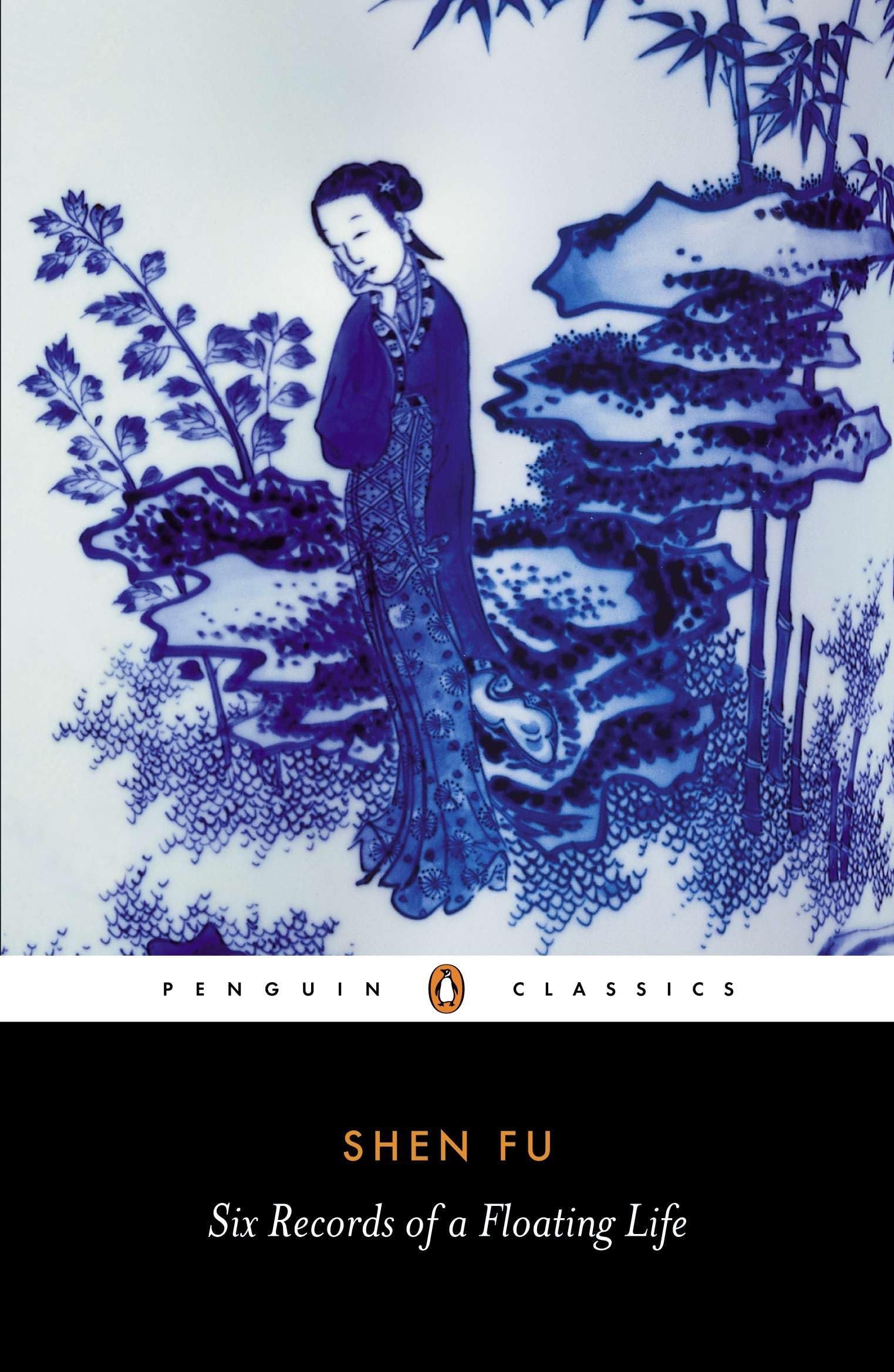
Shen Fu brings late 18th and early 19th century China to life. Reflections on a time of empire, when the barbarian west was developing a presence in southern China and pirates and brigands still terrorised the local population. Shen Fu is a self-described unsuccessful scholar, but still made a life in government and business, despite frequent extended bouts of unemployment. And what a life he lived and enjoyed. A failed scholar, but a wonderful poet: On love - "I went into our room and Yun rose to greet me. She held my hands without saying a word. Our souls became smoke and mist. I thought I heard something, but it was as if my body had ceased to exist"; On life - "There is dung in every house. The only question is whether one eats it" and "Burning incense in a quiet room is one of the refined pleasures of leisure"; The sublime - "As soon as he opened the temple gate we saw the face of the Buddha, its golden reflections mingling with the green shade. The steps of the hall and the stone foundations were covered with moss as delicate as embroidery" and "Their temple on Pu Mountain was covered by, indeed was hidden in, this Sea of Fragrant Snow. The plum flowers were in full bloom at the time and even our coughing and spitting were perfumed by them". Shen Fu lived a wonderful life to the full - finding true joy in the company of family and friends. The approach taken by Shen Fu in covering his life from different perspectives (the 'six records' - of which two are unfortunately lost) is a real pleasure to read, with the texture deepening through each new perspective. Highly recommended for anyone planning to visit Suzhou or Hangzhou - this book resounds with the delights of the gardens, the scenery and a sense of history for this region of China. The Kindle version does not include the beautiful cover of the paperback, but it does include the fine drawings of scenery and maps which illustrate the story.
F**O
This translation is an audacious but failed undertaking
The translators made an admirable effort to tackle an impossible mission but fell short. Which is reflected by mistranslations galore and the shocking misreading of the English version by a book review in the New York Times: And although he and Yun adored each other, she matter-of-factly sought out a concubine for him—with whom, the text implies, she also had sex (lesbian relationships were not especially frowned upon at the time). The translators’ judicious footnotes make the reading all the more pleasurable.
D**D
Wonderful
A wonderful, romantic, thoughtful and sometimes tragic account of a life from 200 years ago in an alien land. When you read it, the author seems to be at your shoulder and could be your contemporary. Very intimate and revealing, and a profound experience to read.
K**O
but enjoyed the reading
Bought for a class, but enjoyed the reading. The book provides a lot of insight into various themes present in Chinese history, going into detail about class and social structure as well as societal pressures of the time. Shen Fu is telling a beautiful story about the life he shared with his wife, though there are times where the story is slow and a bit dry. Overall good read, and very quick to pass the time!
J**R
thanks!
As advertised
J**H
I really enjoyed this book
Great story of a bygone Chinese era. I was sad to see what happened to Yun.
A**R
Great quality
One of my top 10 favorite books, good quality Penguin classic
J**A
Uma vida à deriva — e a lucidez que corta
Six Records of a Floating Life (Shen Fu) é daqueles livros pequenos por fora e imensos por dentro. É uma memória íntima, escrita com simplicidade elegante, que transforma o cotidiano — casa, doença, pobreza, paisagens, humilhações, pequenos instantes de beleza — em matéria literária e, mais do que isso, em matéria existencial. A história tem um núcleo profundamente humano: Shen Fu narra sua vida e, sobretudo, o vínculo com a esposa Yun, que vira o coração emocional do livro. O romance/memória não aposta em grandes reviravoltas; ele te prende pelo contrário: pela sensação de que estamos vendo o que quase nunca é narrado com tanta honestidade — as alegrias delicadas, os sonhos que vão se estreitando, as feridas domésticas, as perdas que não fazem barulho, mas mudam tudo. O tom é de uma melancolia clara, sem drama performático. É um livro que sabe ser terno e, ao mesmo tempo, implacável: ele observa a vida como algo frágil, e justamente por isso precioso. Há uma serenidade que não é paz fácil; é aquela serenidade que vem de encarar o destino, o tempo, a impermanência, e ainda assim tentar salvar alguma coisa em forma de lembrança. No plano filosófico, o texto respira uma sabedoria discreta: a noção de que o valor da existência está tanto no que se possui quanto no modo de sentir e perceber — o olhar sobre uma paisagem, o cuidado com um gesto, a beleza miúda do dia. Existe um fundo de pensamento que passa por ideias clássicas chinesas (equilíbrio, destino, desapego, cultivo interior), mas sempre encarnadas em vida real: o que importa é como isso opera quando falta dinheiro, quando o mundo social pesa, quando o amor precisa sobreviver à pressão. No plano psicológico, é um livro raríssimo porque não tenta “posar” de virtuoso. Ele mostra contradições, arrependimentos, ilusões, autoengano, orgulho ferido, ternura genuína. É quase como assistir a uma consciência se olhando no espelho com delicadeza e culpa ao mesmo tempo. Você termina sentindo que conheceu duas pessoas de verdade — e que a memória, aqui, não é nostalgia: é um método de manter vivo aquilo que o tempo tenta apagar. Recomendadíssimo para quem gosta de literatura íntima, escrita com beleza contida, e para quem quer um livro que deixa uma marca silenciosa — dessas que voltam quando você está sozinho, olhando a própria vida com mais honestidade.
B**R
A modern feel for an older classic
This was a lovely treat. I feel like I've gotten to know Shen Fu as a friend. He was kind, gentle, artistic, observant and loving to his wife. He was happy and content in Life, even while poor & close to destitute. At heart, his life was full of friends and cheer. It was a full life. Shen Fu is a wonderfully intimate and personal writer. I felt like I was with him in his journey. His wife, Yun, was interesting and complex. The two loved each other throughout their time together, which doesn't mean that life was monogamous. Shen Fu was a natural writer and observer of life. He felt and saw and lived. This tiny book encompasses all that. He becomes a person and a friend.
J**Y
Very good
First rate book
J**E
Reflections on a life in China 1800
This is a memoir in four parts of a non important, struggling man living in the 1800. He is very much in love with his wife Yün and recalls in a romantic and longing writing his love for her in the chapter "The Joys of the Wedding Chamber" and the time spent together as true friends in the chapter "The Pleasure of Leisure". It is easy to understand why this story has become a love story in the Chinese literature, since it is quite rare to have an account of a deep love and a strong friendship among husband and wife told in an exquisite simple and yet respectful and delicate writing. Through the author's memoirs the reader is able to have an insight into a time when China was not only about richness and power, nor only about court stories and intrigues, but about a normal life among government clerks, which offered unrecognized status, struggles and poverty. This peek into Chinese society in the 1800 offers us readers a view into family and marriage relationships, the role of courtesans, relationships among women and men, and relationships in the working world of that time. I like this book because it is a touching and personal account of a life of a man who was nobody and yet represents the most of us in our living struggles.
Trustpilot
2 months ago
5 days ago