Cuba (Winner of the Pulitzer Prize): An American History
Product ID: 412070567
Buy anything from 5,000+ international stores. One checkout price. No surprise fees. Join 2M+ shoppers on Desertcart.
Desertcart purchases this item on your behalf and handles shipping, customs, and support to Congo.
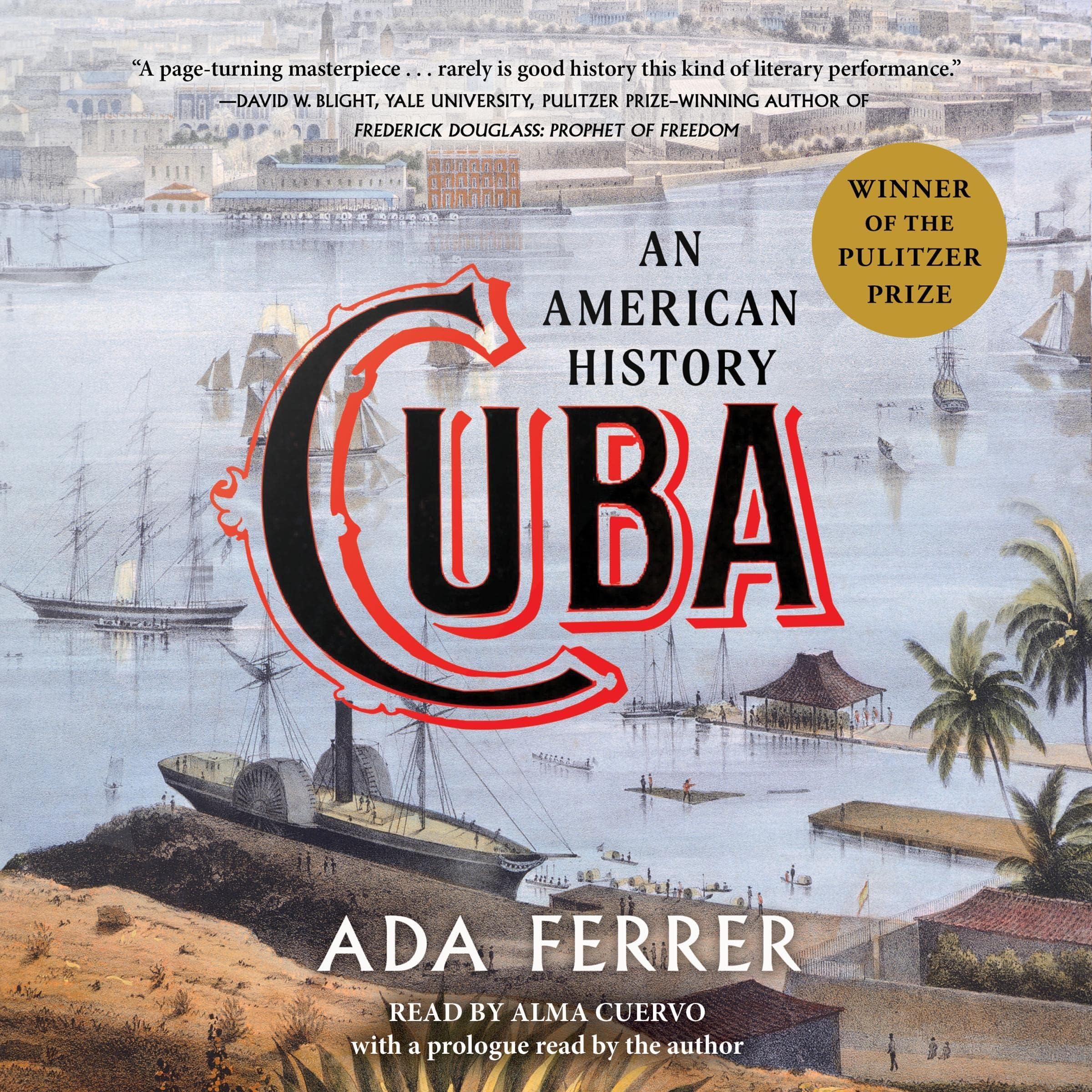
WINNER OF THE PULITZER PRIZE IN HISTORY WINNER OF THE LOS ANGELES TIMES BOOK PRIZE IN HISTORY “Full of…lively insights and lucid prose” ( The Wall Street Journal ) an epic, sweeping history of Cuba and its complex ties to the United States—from before the arrival of Columbus to the present day—written by one of the world’s leading historians of Cuba. In 1961, at the height of the Cold War, the United States severed diplomatic relations with Cuba, where a momentous revolution had taken power three years earlier. For more than half a century, the stand-off continued—through the tenure of ten American presidents and the fifty-year rule of Fidel Castro. His death in 2016, and the retirement of his brother and successor Raúl Castro in 2021, have spurred questions about the country’s future. Meanwhile, politics in Washington—Barack Obama’s opening to the island, Donald Trump’s reversal of that policy, and the election of Joe Biden—have made the relationship between the two nations a subject of debate once more. Now, award-winning historian Ada Ferrer delivers an “important” ( The Guardian ) and moving chronicle that demands a new reckoning with both the island’s past and its relationship with the United States. Spanning more than five centuries, Cuba: An American History provides us with a front-row seat as we witness the evolution of the modern nation, with its dramatic record of conquest and colonization, of slavery and freedom, of independence and revolutions made and unmade. Along the way, Ferrer explores the sometimes surprising, often troubled intimacy between the two countries, documenting not only the influence of the United States on Cuba but also the many ways the island has been a recurring presence in US affairs. This is a story that will give Americans unexpected insights into the history of their own nation and, in so doing, help them imagine a new relationship with Cuba; “readers will close [this] fascinating book with a sense of hope” ( The Economist ). Filled with rousing stories and characters, and drawing on more than thirty years of research in Cuba, Spain, and the United States—as well as the author’s own extensive travel to the island over the same period—this is a stunning and monumental account like no other. Review: delightful to read, and an important history for US citizens to know - If you like survey histories and don't know much about Cuba (and you live in the US), I highly recommend this book. Not only does it cover key events and forces inside and outside Cuba that have shaped it, it's very readable and with on-the-ground anecdotes and quotes, brings to life how events probably felt to the people in or around them. BUT - to take it a level beyond "interesting & readable history book," I think this type of book is *important* to read. Personally, Cuban history was not covered in my public k-12 education in the US, except for the Cuban missile crisis. And due to the embargo, my knowledge of the place and its people has been pretty minimal. (And I think that is probably a very common experience.) Which is unfortunate, because Cuba is one of the US's few direct neighbors. Our histories, like with Mexico or Canada, are very intertwined. Havana has been a cultural hub for the entire hemisphere for the last 500 years, due to where it sat on the gulf stream trade routes between Europe and the Americas, with as much of a musical influence as NYC and New Orleans. Our relationship with Cuba even shapes presidential elections, or led to a nuclear missile crisis... To ignore it is to miss an important part of our own history, and how you treat your neighbors can cause tragic boomerang impacts. To that point, Ferrer frames Cuba's history as an "American" one, that it is hemispheric and intertwined with the US. What she brought to light (for me as a US citizen) was how the US has hungrily viewed Cuba as a place where we can extend our influence & economy. In that self-absorbed mindset, we've missed seeing Cuba's distinct history. We elbowed into their revolution from Spain and claimed them as a de facto vassal via the Platt Amendment. Then an era of progressive and revolutionary Cuban activism during the first half of the 20th century gained political "independence" from the US, at first from the Platt Amendment, then also economically with the nationalization of US-owned holdings under Castro. And thus relations deteriorated completely. Obama's effort to reconnect was a step in a new direction, more as partners and neighbors, but that change is doing some zig zags. Ferrer ends on a hopeful note about we all play a part in shaping the future. So as the book wrapped up, I wondered what a voter in the US might do. Even with a rapprochement, the economic imbalance (small poor country adjacent to a juggernaut) yields these high voltage differences that cause shocks when they connect. US investors eagerly bought up land & plantations a century ago when the revolution had suggested opportunity for all Cubans, then there were flash waves of migrants over the last sixty years. In electric systems you need good transformers that step-down the voltage level, and the question is what could those transformers be between the US and Cuba in the coming decades. No matter what, Cuba is our neighbor. And becoming better neighbors requires getting to know them, empathizing with their perspective, understanding how you're viewed and what your impacts are on them. A book like this is an important part of that journey, and it was great to read. Strongly recommend! Review: A superb and timely book on Cuba ! - Ada Ferrer ably and eloquently ties together the histories of Cuba and the United States in this lengthy book which won the Pulitzer Prize. The relationship between the two countries is contentious and complicated and continuing as the news headlines report. Ferrer is fair and informed. The book has some fine photographs and a detailed map in the beginning.
L**J
delightful to read, and an important history for US citizens to know
If you like survey histories and don't know much about Cuba (and you live in the US), I highly recommend this book. Not only does it cover key events and forces inside and outside Cuba that have shaped it, it's very readable and with on-the-ground anecdotes and quotes, brings to life how events probably felt to the people in or around them. BUT - to take it a level beyond "interesting & readable history book," I think this type of book is *important* to read. Personally, Cuban history was not covered in my public k-12 education in the US, except for the Cuban missile crisis. And due to the embargo, my knowledge of the place and its people has been pretty minimal. (And I think that is probably a very common experience.) Which is unfortunate, because Cuba is one of the US's few direct neighbors. Our histories, like with Mexico or Canada, are very intertwined. Havana has been a cultural hub for the entire hemisphere for the last 500 years, due to where it sat on the gulf stream trade routes between Europe and the Americas, with as much of a musical influence as NYC and New Orleans. Our relationship with Cuba even shapes presidential elections, or led to a nuclear missile crisis... To ignore it is to miss an important part of our own history, and how you treat your neighbors can cause tragic boomerang impacts. To that point, Ferrer frames Cuba's history as an "American" one, that it is hemispheric and intertwined with the US. What she brought to light (for me as a US citizen) was how the US has hungrily viewed Cuba as a place where we can extend our influence & economy. In that self-absorbed mindset, we've missed seeing Cuba's distinct history. We elbowed into their revolution from Spain and claimed them as a de facto vassal via the Platt Amendment. Then an era of progressive and revolutionary Cuban activism during the first half of the 20th century gained political "independence" from the US, at first from the Platt Amendment, then also economically with the nationalization of US-owned holdings under Castro. And thus relations deteriorated completely. Obama's effort to reconnect was a step in a new direction, more as partners and neighbors, but that change is doing some zig zags. Ferrer ends on a hopeful note about we all play a part in shaping the future. So as the book wrapped up, I wondered what a voter in the US might do. Even with a rapprochement, the economic imbalance (small poor country adjacent to a juggernaut) yields these high voltage differences that cause shocks when they connect. US investors eagerly bought up land & plantations a century ago when the revolution had suggested opportunity for all Cubans, then there were flash waves of migrants over the last sixty years. In electric systems you need good transformers that step-down the voltage level, and the question is what could those transformers be between the US and Cuba in the coming decades. No matter what, Cuba is our neighbor. And becoming better neighbors requires getting to know them, empathizing with their perspective, understanding how you're viewed and what your impacts are on them. A book like this is an important part of that journey, and it was great to read. Strongly recommend!
J**Y
A superb and timely book on Cuba !
Ada Ferrer ably and eloquently ties together the histories of Cuba and the United States in this lengthy book which won the Pulitzer Prize. The relationship between the two countries is contentious and complicated and continuing as the news headlines report. Ferrer is fair and informed. The book has some fine photographs and a detailed map in the beginning.
G**N
A compelling but imbalanced history of Cuba
I have mixed feelings about this book. On the one hand, Ferrer is an excellent and engaging writer, and gives the reader an impressive recounting of 500 years of Cuban history. The book is definitely worth reading. On the other hand, she seems to have tunnel vision about some of the more troubling aspects of the history of the Cuban government, and I wonder whether her political views have caused her to eliminate important facts. Her central thesis is that Cuba has been a target of repression and manipulation by Western governments, principally the United States, for centuries. This, perhaps unfortunately, leads her to describe the exploits of Fidel Castro and Che Guevara as those of swashbuckling saviors out to protect the little people. As a result, she glosses over the deprivation of due process and the many murders that Castro and Guevara engaged in, which the Cuba Project estimates exceeded 10,000. She does not talk about the regime’s use of concentration camps, or extrajudicial imprisonment. Nor does she talk about the racism discovered in Che’s diaries after his death, particularly about people of color and Mexicans. She writes glowingly about Castro instituting agrarian reform (in other words, confiscation of land), better health care, higher wages, and equality between men and women. But she has no good explanation for the hundreds of thousands of Cubans who fled the country (including on improvised rafts), even before the collapse of the Soviet Union. She tries to get around this by contending first, that some of these people supported Fulgencio Batista, and second (not kidding) that refugees from Cuba were principally unhappy because Castro made them repeat “revolutionary” slogans. That struck me as ridiculous. While she complains a lot about the US meddling in Cuban affairs, she is nonjudgmental about the Soviet Union becoming involved in Cuba, even though the heavy-handed Soviet government kept the entirety of Eastern Europe behind walls. One minor point: She manages to describe the Spanish-American War without mentioning the Battle of San Juan Hill. (In fairness, late in the book, she talks about a painting in the White House depicting the battle.) Yes, the battle was a minor skirmish. Yes, the war was pretty much over when it happened. But a future US President was involved in the Battle, which, I think, merits a couple of paragraphs. What was the battle about? How did TR get there? The bottom line is that this is an important, enjoyable, and well-written book. But I would suggest reading it with a bit of skepticism.
S**R
Well written..important history
We should know about a country that has played such an important role in our history and which is the ancestral home of many of our friends and neighbors.
T**L
A parallel history of the United States of America and Cuba
Ferrer primes the reader for what is to come by first dispelling the myth of Christopher Columbus' discovery of the United States of America. In 1492 during Christopher Columbus first voyage, he made landfall on the Bahamian island in the America's called "Guanahani" later named San Salvador for the Spanish Crown. The Taino people were indigenous to most of the islands of the north western hemisphere to include the Bahamas, Cuba, Puerto Rico, Jamaica, Haiti, the Dominican republic and many others; and had a culture rich with technology, agriculture, religion and the arts, thousands of years before Columbus arrived. The truth is Christopher Columbus never set foot on the soil of the country we today call the United States of America. The education system in the United States of America teaches us that Columbus discovered America soon after we are taught to read. There are also cities in the United States of America named after Columbus and there is even a painting in the rotunda of our nations capital named "The landing of Columbus" . Last but not least, we even have a holiday honoring Columbus' fictional discovery of America. I look at this narrative of history as a convenient way to humanize what would become the unthinkable. Shortly after the Spanish discovered the abundance of natural resources in Cuba, the Taino people were forced into enslavement and lost 85% of its population by 1520, due to inhumane work conditions, European diseases, combat (Fighting the Spaniards) and suicide. By the year 1550 the Taino people were facing extinction and survived only by mixing with Spaniards, Africans and others. The decimation of the labor force, motivated the trans Atlantic human trafficking of African people, better known as the trans Atlantic Slave trade. The trans Atlantic slave trade lasted 400 years in Cuba and caught on with the near by United States of America where it lasted 366 years. The United States and Cuba collaborated in trade and built an infrastructure to facilitate the trafficking and enslavement of African people. During the American Civil War, Cuba even sent soldiers to the United States to assist the Confederate forces in the hope of preserving slavery. America later started the Spanish American war with the intention of full domination of Cuba. Let me take this moment to mention a few Cuban revolutionaries who were instrumental in the National autonomy Cuba has today. There is Afro-Cuban General Antonio Maceo 1845-1896 2nd in command of the Cuban Army, killed in combat in the first Cuban revolution. General Maceo was such a source of Black pride that even in the United States his name could be heard in the music of James Brown (Mazzio) and many African Americans proudly named their sons after the great General. There was also Afro Cuban intellectual, poet, nationalist Jose Marti 1853-1895 (Killed in combat) also died in the first Cuban revolution against Spanish. Marti was revered as a Martyr and today there is a statue in his honor standing tall in old Havana. Later came the revolutionary lawyer/Marxist and leader of the Cuban people Spaniard/Cuban Fidel Castro 1959-2008 . Castro had a strong distaste for the United States of America and even defeated the American Armed forces in the famous "Bay of pigs" using guerilla warfare. Castro infamously befriended the Soviet union in order to help finance Cuba's economy in trade and effectively kept the United States at bay to this day. Castro would not have achieved his goals without the assistance of Argentine Physician, revolutionary/Marxist Che Guavara 1928-1967. Ferrers use of language, metaphors and irrefutable facts (found on the prologue) gave me the experience of time traveling through a history lesson which began before 1492 and continues today. I thank Dr. Ferrer for her scholarship and talent; all contributing to a Pulitzer prize winning book everyone should read.
H**N
Terrific one-volume history of Cuba-US history
The kind of book that reminds you why you love history--great narrative, great analysis, written with passion. Highly recommended.
J**E
Great read per son.
Son is loving this book to read for ELA class.
W**.
How little we learned in school.
Audible book 4.5 stars, perhaps a physical book would get 5 stars. I feel that I lack knowledge of so many people and places, and because of a work of fiction showed me that I needed to learn about Cuba, I chose this book. The all-encompassing scope of Cuba: An American History by Ada Ferrer means that I had trouble remembering all I heard on my Audible copy. Unable to page back, I used Wikipedia to help me, and as my recall showed more holes, I gave up, and learned what I could. Also difficult with a non-fiction audio book , is mishearing some names or words. it makes it even more difficult to research a topic. Some thingsI gave up on. OK, those were the drawbacks. Now on to what I liked about the book.: My head is reeling with new information. I need more, and I do have another Cuba book to read. With the author's intent to give an in-depth report, I believe I better understand the history of Cuba and the US relationship with that country. My main takeaway is that first Spain, then the US, ruined any chance of having a good relationship with Cuba. Skipping Spain's injustices from the very beginning of outside interference, and only addressing the US-Cuban relationship, we were - and still are - thinking of ourselves. We insisted on dominating every decision made by Cuba until Fidel Castro assumed power, then we sought only to undercut that new nation. We made continued mistakes, showing the world that we have only bad intentions. The information about the Platt Amendment was eye-opening, such arrogance! The Bay of Pigs Invasion and the Cuban Missle Crisis happened in my lifetime. I was between 8 and 11 years old. I only recall the feeling of fear pervasive at the time of the missile crisis, but nothing more. I was raised to hate anything the Soviet Union did, and to say anti-Russian style prayers. I did not know any history. My classes in history in high school reached WWII, but only at the end of the school year. By then I lost interest in any US history classes. Memorization does not teach. I feel cheated. I had no idea that the Bay of Pigs Invasion was OUR FAULT! I didn't even know enough to question this! I'm ashamed! What a terrible thing we did. Just as we have done or tried to do in any country we decided needed to do things our way. Knowing this, I cannot applaud any time a covert operation takes down another member of the opposition. Sorry if that offends you. I recommend this book highly, and know I need to continue my studies.
A**R
Excellent!
The real History of Cuba. I enjoy reading this book very much and I got to know many facts of the Cuban History they don't teach you in schools. Congratulations to the author for the Pulitzer prize. Very well deserved.
C**S
Great book. Well written and topical.
Enjoying this book. First bought it in Audio but am enjoying a more detailed reading.
C**N
Um livro para ser lido
Para quem acha que sabe tudo sobre Cuba e pensa que é o pior lugar do planeta, o livro desconstrói esta noção, localizando, historicamente, como os Estados Unidos fizeram com que a ilha remanescesse como umas das localidades na América Latina que, desde a chegada de Colombo, em 1492, até os dias atuais, a opressão colonialista/imperialista fosse a regra.
M**I
A powerful and eye-opening history lesson
A powerful and eye-opening history lesson As a lifelong history buff, I was stunned by how much I didn’t know. This book opened my eyes to the deep and often disturbing connections between Cuba and the United States. The chapter on Christopher Columbus was particularly revealing, but what truly shocked me was learning how high-level American politicians and wealthy businessmen played a central role in the transatlantic slave trade—long after it was outlawed. It’s a shameful legacy that made me feel embarrassed as an American, especially given how blatantly these actions betrayed the very ideals laid out in the Declaration of Independence. What I appreciated most is how this book helped me see things from a Latin American perspective—something I hadn’t fully grasped before. While I believe the U.S. acted more nobly in the 20th century during the World Wars and the Cold War, the 1800s reveal a predatory, imperialist power that often acted in complete contradiction to its stated values. The writing is superb, and the narrator’s voice (if you’re listening to the audiobook) makes it a pleasure to follow. This book gave me a whole new level of understanding—both of Cuba’s history and of my own country’s role in it.
J**P
Good reading well documented
Great book to know about Cuba
Trustpilot
3 weeks ago
1 month ago