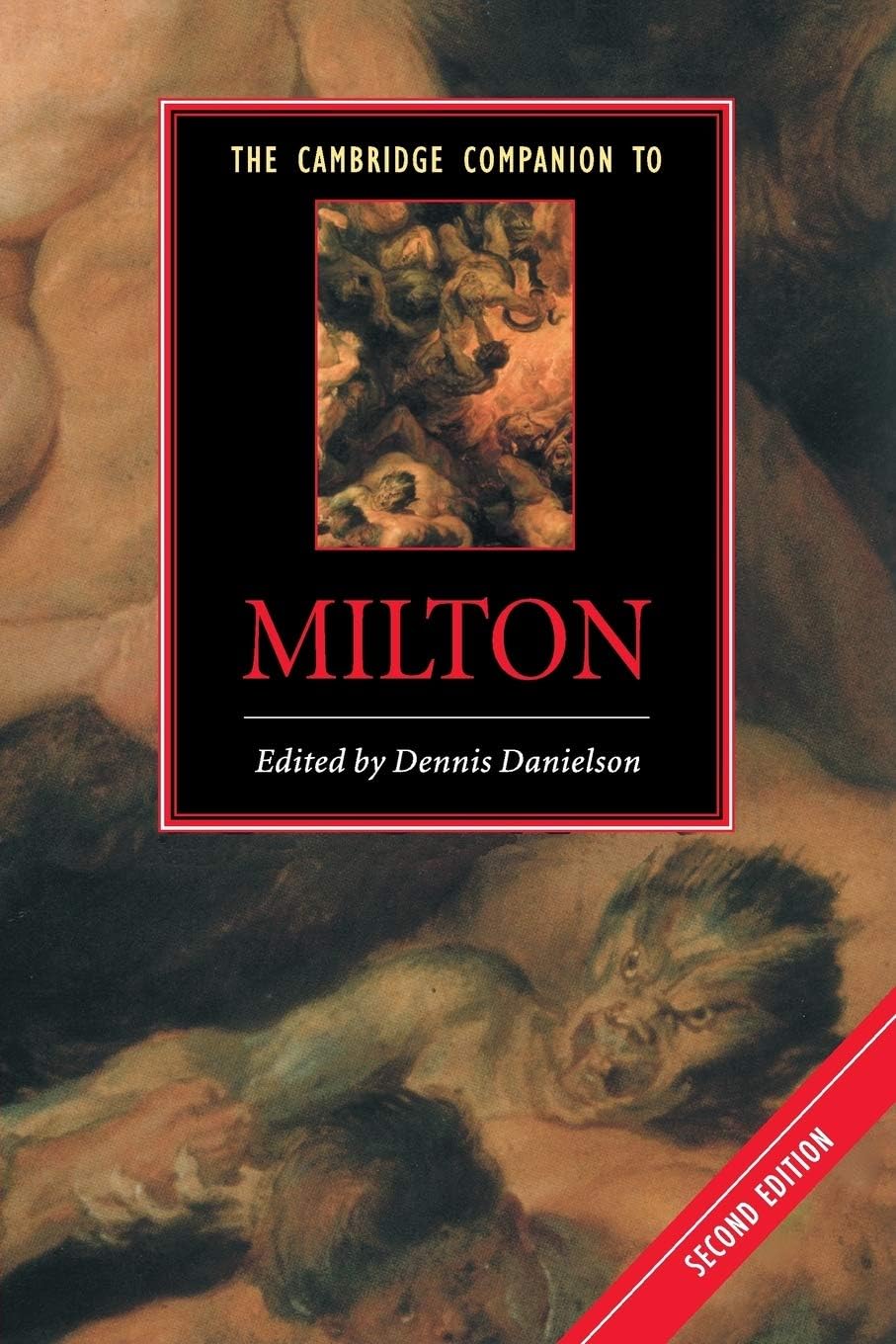
The Cambridge Companion to Milton (Cambridge Companions to Literature)
Product ID: 8023187
Buy anything from 5,000+ international stores. One checkout price. No surprise fees. Join 2M+ shoppers on Desertcart.
Desertcart purchases this item on your behalf and handles shipping, customs, and support to Congo.
The Cambridge Companion to Milton provides an accessible, helpful guide for any student of Milton, whether undergraduate or graduate, introducing readers to the scope of Milton's work, the richness of its historical relations, and the range of current approaches to it. This second edition contains new and revised essays, reflecting increasing emphasis on Milton's politics, the social conditions and climate in which his works were published and received, the importance of his early poems and Samson Agonistes, and the changes wrought by gender studies on the criticism of previous decades. The Companion's updated bibliography of studies and resources on Milton's works and life is available online at . Review: Admirable, Thorough - Like other Cambridge University publications--the Companions and the Introductions--this volume on Milton is more a refresher on current topics in Milton studies rather than a discussion of specific works. This Companion is definitely for the intermediate to advanced crowd who already have some knowledge of Milton's poetry and the history of his time. The 18 essays are written by different authors, but the general editor--Dennis Danielson--organizes the essays in such a way as to give a balanced and integrated view of Milton and his work. Most readers love PL and some of the minor poetry, but most of us can't stand his prose (with the possible exception of Areopagitica). Nor are we convinced that Milton was a very deep thinker about theodicy--typically he treats his assertions like deductions when he's discussing the goodness of Providence. So Danielson and his distinguished, redoubtable crew try to restore Milton to his complete glory--an admirable goal with mixed results. With respect to Milton's prose works, you'll still feel--despite some excellent essays here--that Milton had no deep understanding of politics. In particular, he believed that every revolution takes us one step closer to the New Jerusalem. Nowadays, we believe that revolutions are simple transfers of power from one party to another. With respect to theodicy, as said before, Milton leaves more questions unanswered than answered. As for the age-old debate about sexism in Milton's work, these essays do an admirable job in showing that Milton felt that marriage was the highest form of happiness that man and woman could experience. It pained him deeply that men and women throughout the ages fought so much and took it upon himself in PL to explore and understand why. His outdated beliefs in the ascendancy of the male over the female make his beliefs either offensive or ridiculous to modern readers. But his intentions--unprogressive as they are--seem well-intentioned and impassioned. Indeed, one writer makes the point that today's young women dislike to hear that they came from Adam's rib, but they have no problem being told that they descended from fat and hairy apes. As for the question of Satan, the essay in this volume cleverly avoids the anti-Satan/pro-Satan/yes-no dichotomy by explaining the source of Satan's strong dual appeal. The writer explains that Satan's character has a depth and imagination that other characters in PL do not display. The essay is enjoyable and stimulating, but I have to insist part of the pleasure of reading PL is staking your claim on one side of the Satan debate or the other--even though that debate does become very strident and hostile at times. Another strength of this Companion is that you'll find some excellent essays about Milton's other poems besides PL. The essay about Lycidas is so good that it might become a standard reference. J. Martin Evans capably synthesizes all the important previous work on this poem and then adds his own subtle and convincing suggestions about how sexual anxiety may have inspired the work. Samson Agonistes receives a very sympathetic reading and confronts head-on that many contemporary readers perceive Samson as some kind of terrorist. You may not agree with the author's proposed resolution, but you will find it thoughtful and compelling. If you have read PL and some of the minor work in a college environment, you'll find a lot to enjoy in this volume. If you're curious about Milton's poetry and you've only read a few books of PL, you probably should look elsewhere. Review: New to Milton - As a relative newcomer to the world of John Milton, I found this book incredibly useful in providing a comprehensive overview of the many facets of the man, his life, his work, his politics and his poetry. I would read it in conjunction with a good biography. The essays vary in their degree of complexity and the opinions of the essayists are thoughtful and informative and several of them exhibit a real passion for their subject. I'm not a Milton specialist but I would imagine there is enough substance here to keep even the most rigorous scholar stimulated and for students and people like myself who are interested in the man and world behind Paradise Lost, I can highly recommend it.
| Best Sellers Rank | #757,885 in Books ( See Top 100 in Books ) #720 in British & Irish Literary Criticism (Books) #744 in British & Irish Poetry #2,361 in Literary Criticism & Theory |
| Customer Reviews | 4.6 out of 5 stars 27 Reviews |
M**S
Admirable, Thorough
Like other Cambridge University publications--the Companions and the Introductions--this volume on Milton is more a refresher on current topics in Milton studies rather than a discussion of specific works. This Companion is definitely for the intermediate to advanced crowd who already have some knowledge of Milton's poetry and the history of his time. The 18 essays are written by different authors, but the general editor--Dennis Danielson--organizes the essays in such a way as to give a balanced and integrated view of Milton and his work. Most readers love PL and some of the minor poetry, but most of us can't stand his prose (with the possible exception of Areopagitica). Nor are we convinced that Milton was a very deep thinker about theodicy--typically he treats his assertions like deductions when he's discussing the goodness of Providence. So Danielson and his distinguished, redoubtable crew try to restore Milton to his complete glory--an admirable goal with mixed results. With respect to Milton's prose works, you'll still feel--despite some excellent essays here--that Milton had no deep understanding of politics. In particular, he believed that every revolution takes us one step closer to the New Jerusalem. Nowadays, we believe that revolutions are simple transfers of power from one party to another. With respect to theodicy, as said before, Milton leaves more questions unanswered than answered. As for the age-old debate about sexism in Milton's work, these essays do an admirable job in showing that Milton felt that marriage was the highest form of happiness that man and woman could experience. It pained him deeply that men and women throughout the ages fought so much and took it upon himself in PL to explore and understand why. His outdated beliefs in the ascendancy of the male over the female make his beliefs either offensive or ridiculous to modern readers. But his intentions--unprogressive as they are--seem well-intentioned and impassioned. Indeed, one writer makes the point that today's young women dislike to hear that they came from Adam's rib, but they have no problem being told that they descended from fat and hairy apes. As for the question of Satan, the essay in this volume cleverly avoids the anti-Satan/pro-Satan/yes-no dichotomy by explaining the source of Satan's strong dual appeal. The writer explains that Satan's character has a depth and imagination that other characters in PL do not display. The essay is enjoyable and stimulating, but I have to insist part of the pleasure of reading PL is staking your claim on one side of the Satan debate or the other--even though that debate does become very strident and hostile at times. Another strength of this Companion is that you'll find some excellent essays about Milton's other poems besides PL. The essay about Lycidas is so good that it might become a standard reference. J. Martin Evans capably synthesizes all the important previous work on this poem and then adds his own subtle and convincing suggestions about how sexual anxiety may have inspired the work. Samson Agonistes receives a very sympathetic reading and confronts head-on that many contemporary readers perceive Samson as some kind of terrorist. You may not agree with the author's proposed resolution, but you will find it thoughtful and compelling. If you have read PL and some of the minor work in a college environment, you'll find a lot to enjoy in this volume. If you're curious about Milton's poetry and you've only read a few books of PL, you probably should look elsewhere.
K**E
New to Milton
As a relative newcomer to the world of John Milton, I found this book incredibly useful in providing a comprehensive overview of the many facets of the man, his life, his work, his politics and his poetry. I would read it in conjunction with a good biography. The essays vary in their degree of complexity and the opinions of the essayists are thoughtful and informative and several of them exhibit a real passion for their subject. I'm not a Milton specialist but I would imagine there is enough substance here to keep even the most rigorous scholar stimulated and for students and people like myself who are interested in the man and world behind Paradise Lost, I can highly recommend it.
B**O
Four Stars
A great assist on my thesis.
C**K
A Splendid Overview
As a novice to Milton studies, I could be deceived by the quality of the essays collected here. Nevertheless, they read to me as informative, well-judged, well-documented introductions to the broad array of social, political, religious, and biographical dimensions of Milton's work. The balance of scholarly opinion seems to me good; the book is well edited and produced with the sheen that one expects of Cambridge University Press. One also expects CUP volumes, even in softcovers, to be overpriced. I purchased a "Like New" edition at an affordable price, was not deceived by the seller, and am clam-happy.
R**R
Great Help
I have not read Milton since high school. This is good learning resource for helping me to understand what I am reading!
J**R
Five Stars
Perfect for my college class
N**S
The Best Place to Start
I owned a copy of this as a junior in secondary school, after my English teacher lent me a copy to have me read Carey's essay on Milton's Satan. That essay in particular is a great representative of this collection: all the essays help readers understand the most common elements of criticism on Milton that the average reader might not pick up on during their first read-through of his work. Aside from Milton's Satan, the essays in this companion focus greatly on Milton's context (his politics, his social environment, etc) and on Paradise Lost, which makes it perfect for beginners to Milton who want to get the most out of their readings of his work. Cambridge Companions are for the most part excellent starting points for understanding criticism on specific authors, and this one is an excellent example. Any students who are beginning to study and appreciate Milton's work should pick this up - at the very least, it will help you contribute to class discussion and earn major brownie points with your teacher or professor.
P**H
Remarkably clear and helpful
I never understood what all the fuss about Milton was about until I read this book. His times, his politics, his personality and his work are all illuminated in these essays.
E**G
An Epic Companion
Got this book to help me with my Milton essays. I can say it is highly informative, with all the list of secondary sources one could possibly need. I will also say that it was well packaged, arrived pretty quickly and was in great condition. Pretty much brand new. Very happy with the item.
J**S
Wonderful
What a wonderful book this is. The essays are clearly written and accessible to all and generally avoid silly academic language. Recommended for anyone wanting to know the work of this great poet better. Prompted me to reread Paradise Lost and was dazzled by its beauty and ingenuity - not always an easy read but if you put in the effort you will be rewarded a hundredfold.
M**E
Five Stars
Excellent book - arrived much earlier than expected
S**E
Five Stars
satisfied, thanks
Trustpilot
1 month ago
4 days ago